| Budget move | Supported effect | Planning use |
|---|---|---|
| Paint, decals and DIY storage | Budget playrooms lean on these instead of expensive furniture | Make finishes and storage the core of the plan, and treat new furniture as optional. |
| Storage cubes and crates | Cost only a few dollars each | Buy storage in stages and add more only when toys actually pile up. |
| Single wall shelves | Often found for under $20 each | Use wall space for books and display so the floor stays clear. |
| Rugs | Define play zones and reduce noise | Pick a rug for the main play area first, because it also marks the layout. |
| Carpet tiles | Cheap, and can be rearranged and cleaned easily | Choose tiles over a rug where spills are likely or the layout will change. |
| Coffee tables, low tables, stools, ottomans | Can do double duty as kids’ tables and seating | Check adult furniture before buying anything labelled for children. |
| Chalkboard paint | Turns a wall into an erasable chalkboard for a fraction of the cost of boards | Use it as the art and drawing surface instead of buying an easel. |
The effects above come from DesignCafe’s budget playroom guide and Wise Bread’s budget design ideas.
Playroom ideas on a budget work best when spending goes to storage and floor covering first, with repurposed furniture and paint filling the gaps, so a playroom stays realistic on a tight budget.
Storage habits that carry over to the rest of the house are covered in home organization for moms, which pairs well with the room-by-room choices below.
Planning a budget playroom
A playroom should hold everything a child needs to play, according to PODS, and that is a useful test for a tight budget. Anything that does not support play, storing toys or sitting down can wait. DesignCafe makes the same point from the cost side: budget-friendly options focus on paint, decals and DIY storage over expensive furniture.
That points to a spending order rather than a fixed price list. Prices vary by region and by how patient you are with secondhand listings, so the order matters more than any single figure.
- Storage first. Crates, cubes and a few wall shelves cost the least per item and have the biggest effect on how the room feels day to day.
- Floor cover second. A rug or a set of carpet tiles defines the main play area, softens noise and gives children somewhere comfortable to sit.
- Seating and a table third. Look for secondhand or adult pieces that can be reused instead of buying a themed kids’ set.
- Paint and decals last. Finishes make a mismatched room look intentional, so spend what is left here, not before the practical pieces are in place.
Keep a small reserve unspent until the room has been used for a while. Children usually reveal what is missing, whether that is another bin, a place to sit or a surface to draw on, and a reserve lets you fix it without going over the cap.
Storage built from crates, cubes and shelves
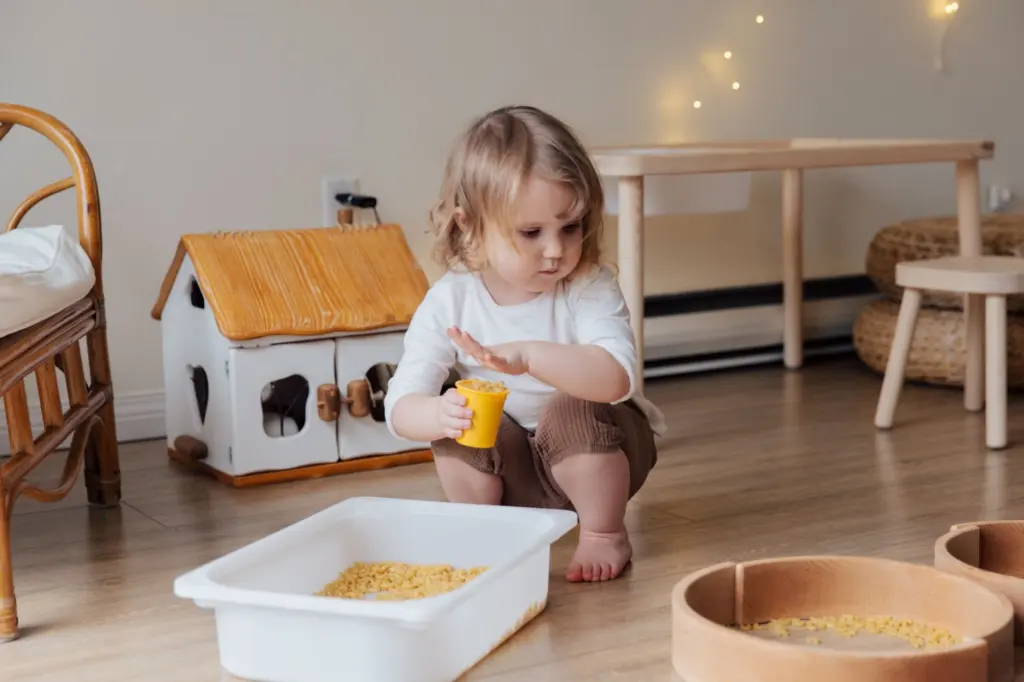
Toy storage is where a small budget stretches furthest. Storage cubes and crates, as Wise Bread notes, only cost a few dollars each, and DesignCafe lists stackable crates, repurposed baskets and wall-mounted organisers as ways to keep clutter under control. Stacked crates also work as open shelving, so the same purchase serves as both container and furniture.
Toy boxes still earn a place. PODS calls them a must so nobody steps on a LEGO, which makes a box a good home for oversized or loose items that do not suit a labelled bin.
Open shelves, bins and labels
Open shelves with fabric bins make sorting toys easy, according to DesignCafe, and labelled boxes teach children responsibility for putting things back. Rockin Mama goes further and calls labelling every container the most important part of a DIY playroom storage unit. Chalkboard labels or alphabet stickers both work, and picture labels suit children who cannot read yet.
Wall shelves for books and display
Single wall shelves are often found for under $20 each. They keep books and favourite toys off the floor and out of the way of the main play area. Fit them at a height children can reach, so tidying stays their job.
Furniture to repurpose
The most useful rule for furniture on a budget comes from PODS: look for pieces that have more than one function. That one filter removes most novelty items and favours things that keep working as children grow.
- Solid wood pieces. PODS points out that solid wood stools, chests and bookshelves are made to last and are relatively easy to sand and refinish, which makes them the best thrift finds to refresh with paint.
- Old bookshelves. DesignCafe suggests they can store toys, and a low shelf doubles as a divider between zones.
- Coffee tables. They can double as art or LEGO stations, and Wise Bread adds that other low-height tables, stools and ottomans can serve as kids’ tables or seating.
Cheap adult furniture often beats thrifted kids’ furniture because it was not designed around a theme, so it adapts to new uses more easily. Choose the sturdiest piece you can find rather than the best-looking one, since paint covers cosmetic faults but not a wobbly frame.
Wall treatments are another way to make secondhand furniture look cohesive. Paint is the cheapest route, and for a bolder statement on one wall, Nursery Wallpaper Ideas: 20 Stylish Looks To Inspire A Calm, Playful Room In 2026 – Revolucionmama shows how pattern can set a calm, playful tone.
Zoning the playroom
Rugs are the simplest way to divide a playroom. PODS notes that a rug or flooring helps define the space in an open plan, and DesignCafe adds that rugs define play zones while also reducing noise, which matters in apartments. Choose the rug for the main play area first, and let shelves and furniture mark the edges of the other zones.
Carpet tiles suit families who expect the layout to change. Wise Bread says they are a cheap way to cover floor space and can be rearranged and cleaned easily. A stained tile can be swapped, which a single rug cannot do.
Which zones to create
A reading nook and a craft table are the two most practical zones to start with. DesignCafe pairs a reading nook with floor cushions, which encourage quiet time, with a craft table that supports creativity. Add an open floor area for active play and place the quiet zone away from it, so a child can sit with a book while another plays nearby.
Reading nook and art station
Reading nook
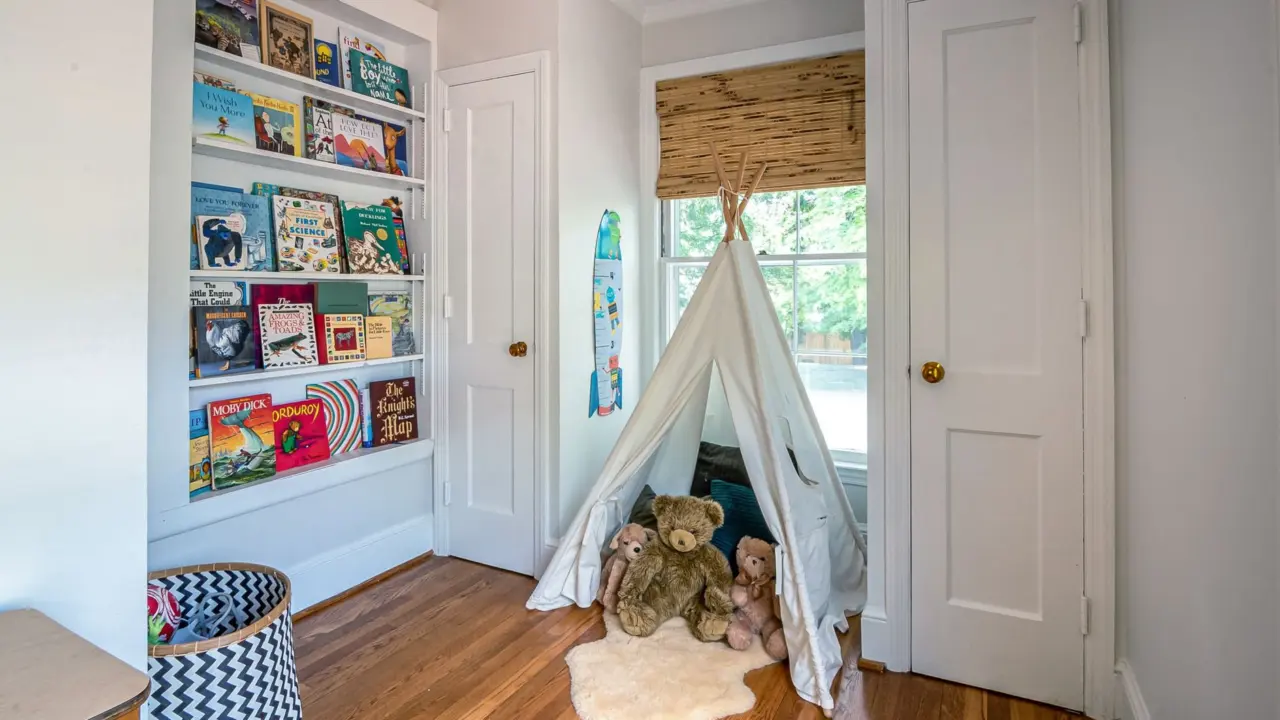
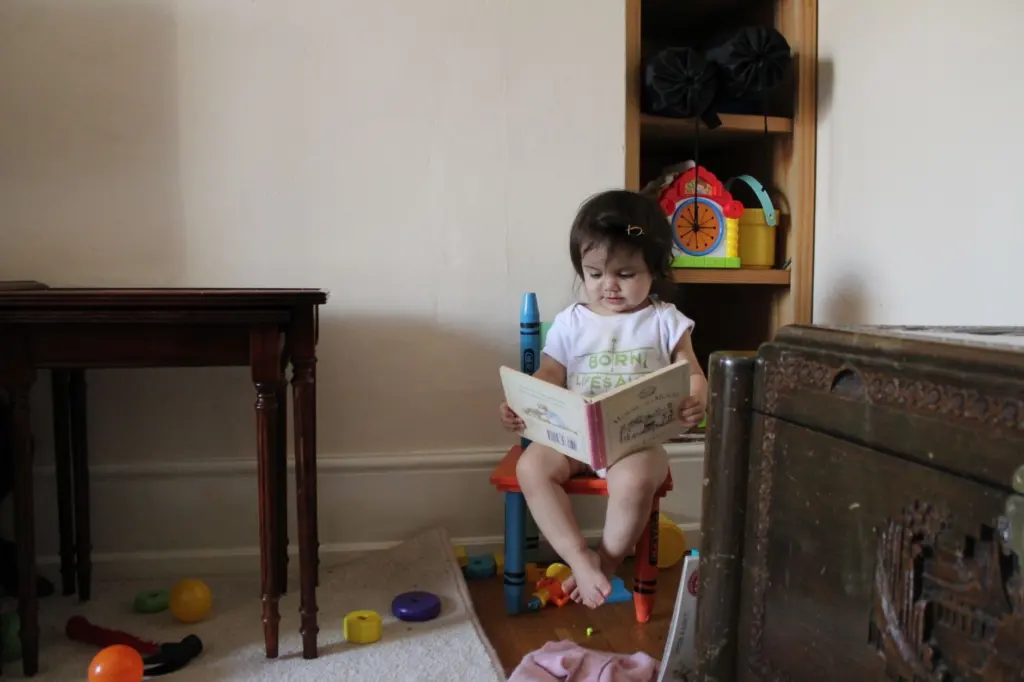
A reading nook needs very little: a soft place to sit and a shelf or basket of books within reach. Wise Bread describes a square floor cushion as an easy and economical thing to make for children to lounge on. A cushion on a rug in a corner, with a low shelf beside it, is a complete nook.
Art station
Wise Bread suggests designating one of your table finds as an art center, and DesignCafe agrees that a repurposed coffee table can serve as an art station. Clean and reuse small jars, such as old jam or salsa jars, to hold pencils and brushes. If wall space allows, chalkboard paint turns a section into an erasable drawing surface, so the table can stay clear for paper and paint.
Safety, cleaning and flexibility
Floor mats provide cushioning and protect against slips and falls, as DesignCafe notes, which is a good reason to put them under the active play area before spending on decoration. Carpet tiles serve the same purpose and are easier to clean than a large rug.
Flexibility is also part of the budget. Foldable furniture works especially well in apartments where space needs to remain flexible, and lightweight pieces are easy to move when children outgrow a zone. If the room may later serve more than one child, Twin Nursery Ideas: Stylish, Functional Designs for Two Babies in 2026 – Revolucionmama offers layout thinking for sharing a space between two small children.
Frequently asked questions
Is a toy box worth buying?
Yes, if it is cheap or secondhand. PODS describes toy boxes as a must so you do not step on a LEGO, and they work best for bulky or loose toys that do not fit labelled bins.
How do I stop toys from taking over the room?
Stash extra toys in a closet and bring them out on a rotation schedule, as PODS suggests. A smaller selection on the shelves is easier for children to put away.
What works in an apartment playroom?
Foldable furniture keeps the space flexible, and DesignCafe notes that rugs reduce noise, which helps with neighbours. Wall shelves also save floor space.
Where can I find affordable bins and baskets?
Rockin Mama found a ton of affordable baskets, trays and bins at a discount store. Check the storage aisle of a general retailer before paying for specialist playroom organisers.