Parents read twin nursery ideas to plan a safe, calm room for two babies. This guide lists clear options for layout, color, and furniture. Each sentence shows a practical step. The reader finds solutions that fit common room sizes and budgets. The article uses direct language and concrete tips to help parents decide quickly and confidently.
Key Takeaways
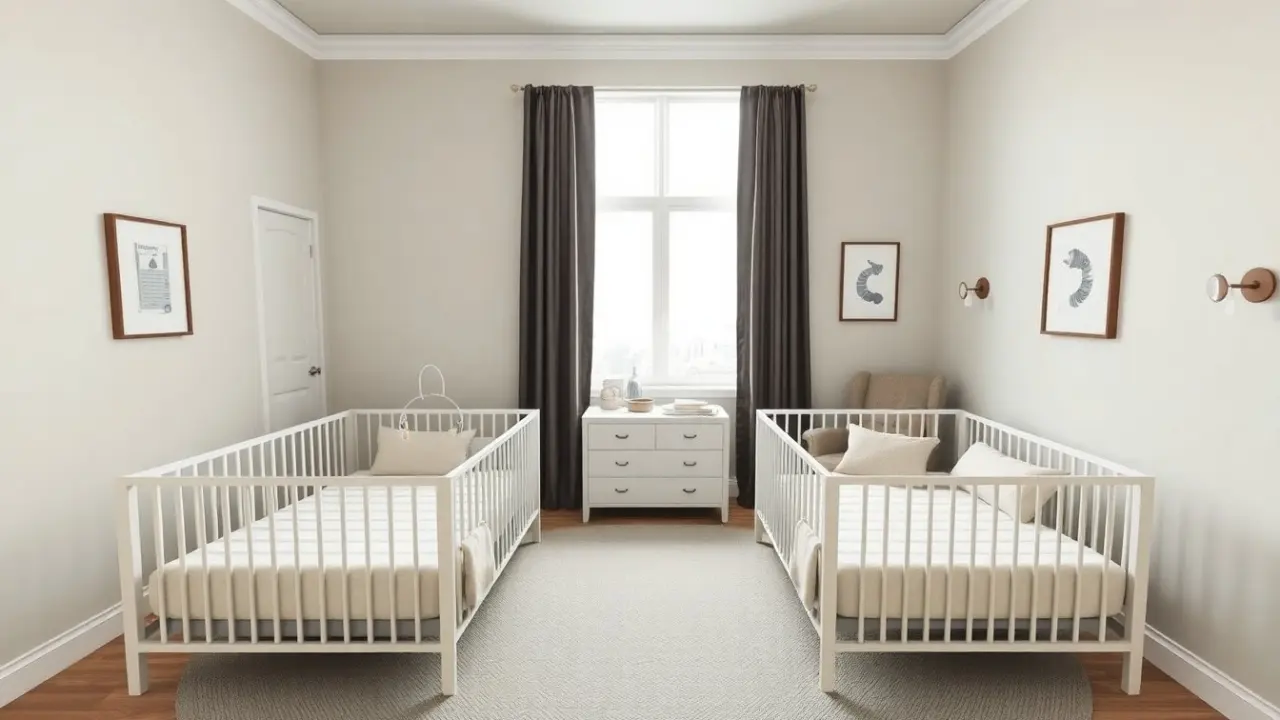
- Twin nursery ideas emphasize efficient room layouts, such as placing cribs against opposite walls or side by side with adequate space for caregiver movement.
- Using a simple color scheme with neutral bases and subtle accents creates a calming environment suitable for two babies in a twin nursery.
- Selecting convertible cribs and multi-use furniture maximizes investment and adapts to growing toddlers’ needs.
- Safety is paramount: choose JPMA-certified cribs, non-toxic paint, and secure décor properly to ensure a safe twin nursery.
- Incorporate functional zones like changing areas near the door and comfortable nursing chairs to streamline daily care for twins.
Room Layouts That Maximize Space for Twins
Parents place cribs first to set the room flow. They position cribs against opposite walls when the room measures at least 10 by 10 feet. They place cribs side by side when a single wall offers 8 to 10 feet of clear space. They choose a diagonal placement to free floor space when the room has a large doorway or closet. They keep a 2.5-foot aisle between cribs to allow a caregiver to move freely. They use a dedicated changing zone near the door to reduce steps during night care. They add a nursing chair or sit-stand station near the window when space allows. They select a compact dresser that doubles as a changing table to save square footage. They place hook rails at adult height for bags and coats to keep floor space clear. They use a low bookshelf as a room divider when parents want distinct play zones. They install wall sconces instead of floor lamps to free floor edges for storage. They use a rug to anchor the crib area and to soften falls when toddlers learn to walk.
Color Themes, Patterns, and Décor That Work For Two
Designers recommend a simple color scheme to calm two babies. They pick one neutral base and add two accent colors to keep the room cohesive. They limit bold patterns to one wall or to textiles to avoid visual overload. They use repeating motifs to tie both sides of the room together. They choose washable paint and easy-clean fabrics for high-use surfaces. They select blackout curtains to help both babies sleep longer during daytime naps. They hang matching mobiles above each crib to give each baby an identical focal point. They use different accent pillows for a soft personal touch only after infants start sitting. They add framed prints at adult eye level to avoid visual clutter near the cribs. They include a growth chart on a free wall to track both babies and to add a visual story. They choose non-toxic paint and secure all décor to studs to meet safety best practices. They place a night light with adjustable brightness near the change zone to reduce full-room wakeups.
Furniture Choices Every Twin Nursery Needs
Parents choose sturdy furniture that fits two infants and their gear. They prioritize safety, durability, and modularity when they shop. They pick neutral finishes to keep the room flexible as children grow. They select items that provide extra storage to reduce clutter. They measure doorways and staircases before delivery to avoid returns.
Convertible Cribs And Multi‑Use Pieces
Caregivers buy convertible cribs to extend use from infant to toddler. They pick models that convert to toddler beds or daybeds to stretch the investment. They choose two identical convertible cribs to simplify bedding and replacement parts. They select cribs with adjustable mattress heights to ease nighttime lifts. They check for JPMA certification and look for fixed rails to meet safety standards. They select multi-use pieces such as dressers that double as changing tables. They pick gliders that convert to reclining chairs or sleepers for long nursing sessions. They choose a compact wardrobe that fits both infants’ clothes when closet space is limited. They opt for furniture with smooth edges to reduce bumps as toddlers move.