Kids room decor ideas work best when you build the room in layers: a neutral base that lasts, a few personal touches that reflect the child, and storage and textiles that are cheap to swap as interests change.
The same stages apply whether you are refreshing one corner or furnishing a whole room. For the wider picture of setting up the rest of the home, see our guide to home organization for moms.
The order that keeps a kids room flexible
A kids room stays useful for longer when the expensive, hard-to-change decisions come first and the playful decisions come last. IKEA describes the aim of a children’s room as a space that is safe, fun and easy to grow in, and that wording makes a good test for every purchase. Work through the room in this sequence:
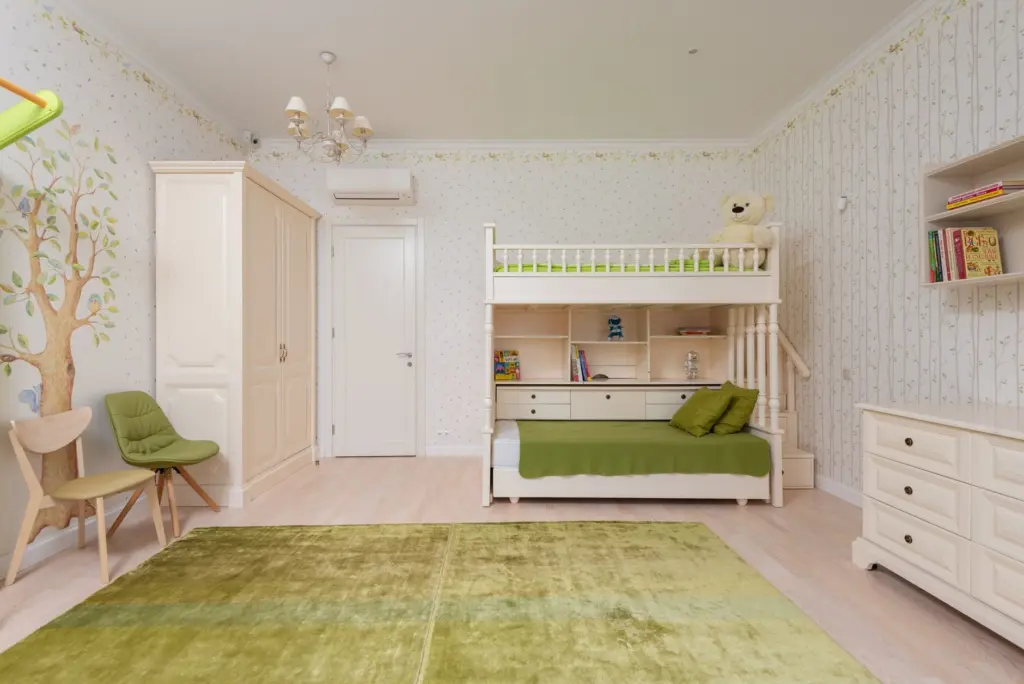
- Settle safety first. Beds, ladders, outlets and edges decide what you can buy, so check them before choosing colors.
- Fix the base palette. Walls and large furniture are the pieces you will live with longest, so keep them calm.
- Choose the sleeping and storage furniture. A loft bed, bunk or built-in storage sets how much floor is left for play.
- Add personality at wall level. Murals, peel-away wallpaper and a rotating art display carry the theme without taking up floor space.
- Finish with rugs, bedding and light. These are the easiest layers to replace, so they take the boldest choices.
The sections below follow that order, starting with how to choose a theme.
Choosing a theme and color palette
A good theme starts from what the child already likes to do, then gets translated into color and a few anchor pieces rather than a full set of themed furniture. The designer behind one kids-bedroom roundup at D’Kor Home put the goal simply: spaces that reflect what the children liked to do but grow with them.
Start with the child’s interests
Ask what the child loves, then pick one visible way to show it. In the same D’Kor Home project, a boy’s love of the outdoors became a custom outdoor-themed wallpaper mural with mountains and a lake, and it served as the focal point of the room. For girls’ rooms, the designer’s advice is to use the child’s favorite colors and favorite things so the room feels truly personal.
This approach answers the question of how to choose a theme for a kids room: choose an interest, not a character or trend, and express it through one wall or one color. Interests tend to outlast a particular franchise, and a mural or color scheme is easier to live with when the interest shifts slightly.
Neutral base, bolder accents
Keeping the base neutral gives the child’s own things room to shine. The D’Kor Home designer describes the theory as keeping the decor neutral and sophisticated so a child’s art and posters can stand out. That suits parents who expect tastes to change, because swapping posters is simpler than repainting.
Color still has a place. Architectural Digest notes that decorating for a child brims with license to go all in on color. A practical way to use that license is to put the strongest color in the pieces you can replace easily, and to keep large furniture and most walls quieter. In a larger home, one designer featured by Architectural Digest zoned the house by color, which helped control the variety of pieces and themes. The same idea works for siblings: give each child a signature color within a shared, calm background.
A themed look without a full theme
If the child changes favorites often, layer instead of committing. D’Kor Home points out that layering wall finishes and textures in fabrics, rugs and bedding can give the illusion of a theme. That means a jungle, ocean or outdoor feel can come from a rug, bedding and a wall treatment, with nothing permanent to undo later.
Space-saving furniture and beds
The furniture that saves the most space is the furniture that sleeps and stores in the same footprint. The loft bed and the bunk are the two main routes, and the choice depends on how many children share the room and how much storage you need.
Loft beds and bunks
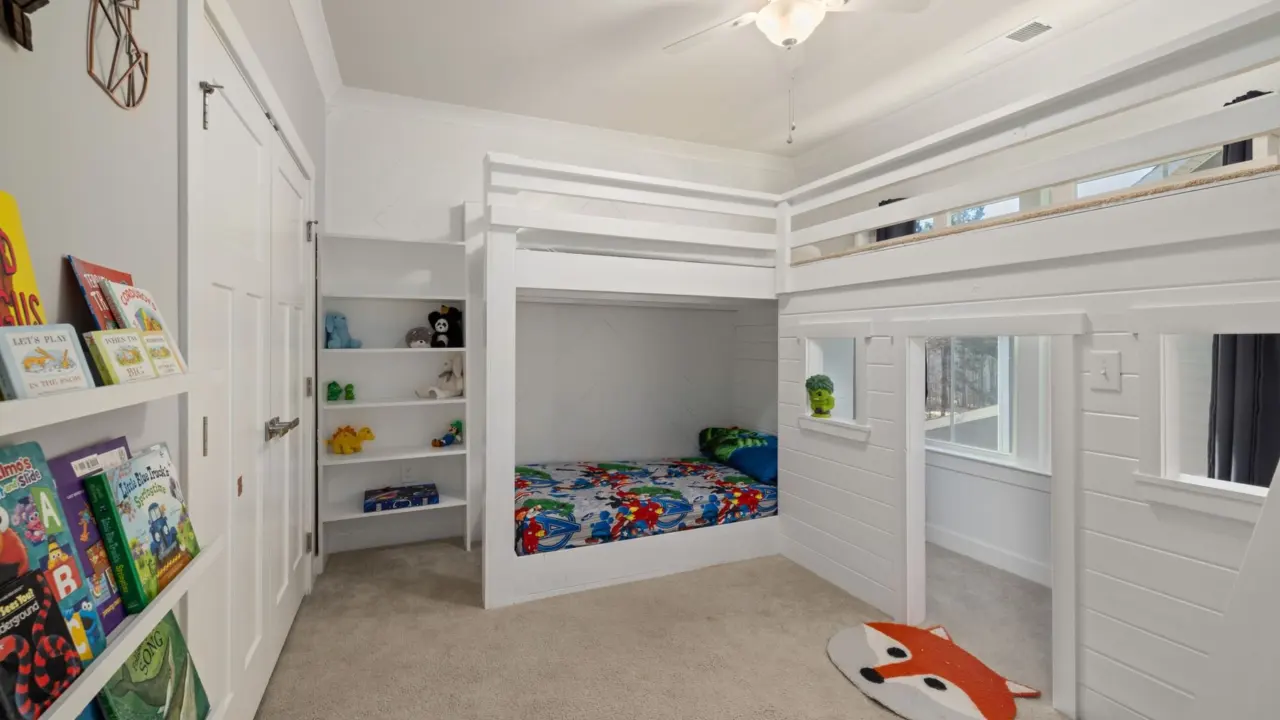
A bunk or raised bed frees the floor for play, which is the main reason to choose one in a small room. Houzz shows custom bunk beds that integrate storage cubbies within and roller-drawers beneath, so the bed itself does some of the job of a dresser. Bunks also earn their place in larger homes: Architectural Digest describes a house with a bunk room for the girls’ lively sleepovers, a good idea if friends and cousins stay over often.
Choose a bunk or loft for a child who is steady on a ladder and for a room where floor space is the limiting factor. If the room is large enough or the child is small, a standard bed with storage drawers or boxes underneath is a calmer option. Either way, plan the bed for the long term. The D’Kor Home designer chose queen-sized beds for teen boys to grow into, so the beds would not need replacing as the boys got older.
Built-in and freestanding storage
Storage is easiest to manage when it is built into the structure of the room rather than added in pieces. IKEA frames good children’s rooms around smart storage, playful design and practical solutions together, and the examples below show how that plays out.
| Option | What the project did | Planning use |
|---|---|---|
| Bunk with built-in storage | Storage cubbies within the bed and roller-drawers beneath | Suits shared rooms where a separate dresser would crowd the floor |
| Floor armoire | 8 separate storage units, each approximately 12 x 24 inches and 8 inches deep | Check that your bins and clothing folds fit those proportions before copying the idea |
| Closets with shelving and drawers | Closets designed to organize all of the children’s clothes | Moves clothing storage off the bedroom floor and out of sight |
| No extra furniture | A boy’s room kept free of additional pieces to avoid clutter | Works when the bed and closet already hold everything the child needs |
The figures and approaches above come from a Houzz small-room project gallery and from the D’Kor Home designer’s kids-bedroom projects.
Toys need a system of their own, separate from clothing. For ways to contain them, see Toy Storage Ideas: Clever, Kid-Friendly Ways to Declutter Your Home in 2026 – Revolucionmama.
Room safety checklist
Safety checks belong before decoration, and a raised bed is where they matter most. Start by following the manufacturer’s assembly and anchoring instructions for every bed and tall piece of furniture, then use the points below, which come from Houzz project notes, as prompts for your own room.
- Bed sides: One raised-bed project used extra long and higher side boards so any rolling in bed is kept safe. Check the guard height on any bunk or loft against the child’s age and the maker’s guidance.
- Ladder access: In the same project the ladder was included only for parents. Decide who needs to reach the top bed before you choose where the ladder goes and whether it stays fixed.
- Surfaces and edges: A raised-bed project sanded the decking and cleaned the edges to prevent splintering. Run a hand over any handmade or secondhand wood before a child sleeps near it.
- Outlets: A loft-bed project covered power outlets using exterior industrial outlets. Wherever a bed sits near wall outlets, cover them.
- Everyday test: Apply IKEA’s standard for a children’s room, that it should be safe, fun and easy to grow in. A decor piece that fails the first test should not be kept for the other two.
Revisit this list when the child changes beds, gets taller or starts climbing in new ways, since the right setup at one age is not necessarily right at the next.
Walls and display
Walls give you the most decorative impact for the least floor space, and they are the easiest place to reflect the theme. Pick one treatment and let the rest of the room support it.
Murals, wallpaper and art
A mural is the bolder choice. The D’Kor Home outdoor mural shows how one wall can carry the whole concept of a room. For renters, or for children whose interests change quickly, Houzz notes that adhesive-backed custom photo wallpaper can be peeled away without wall damage, which keeps the decision reversible. A simple painted wall decal, like the tree on the wall below, gives a similar look with little commitment.
Rotating the child’s own art
Children’s artwork is the most personal decor available and costs nothing. A playroom in the Houzz gallery used a wall system allowing easy rotation of kids’ art. For a busy parent that matters: when changing the display takes seconds, the wall stays current without becoming a weekend project, and nothing has to be thrown away to make room for new pieces.
Lighting, rugs and textiles
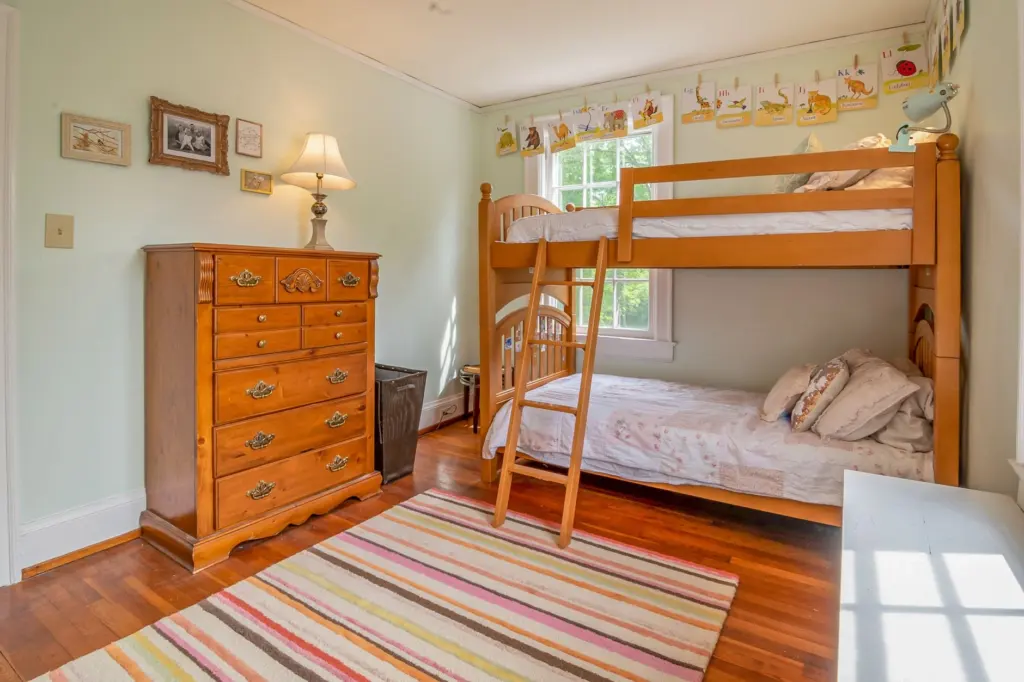
Rugs, bedding and light fittings are the quickest layers to change, so they are the right place for color and pattern. Architectural Digest’s feature shows two different roles for a rug: in one son’s bedroom, the vintage David Hicks hex motif rug is the star attraction, while in another room an earthy carpet is paired with a Silvio Piattelli pendant to round out the scheme. The lesson is to let either the rug or the light fitting be the statement, not both, and to keep the base calm around it.
Layering also keeps the theme flexible. Pairing a rug with bedding and fabric textures, as D’Kor Home suggests, gives a room its look without a permanent commitment. If the room feels flat, add a lamp or a rug before you consider repainting.
Decorating on a budget and over the years
The cheapest kids room is the one you do not have to redo. Spend on the large pieces that will last, and keep the short-lived decor inexpensive. A Houzz small-room plan was built so the furniture could last up to the boy’s teen years without breaking the budget, and the room was designed for active children across a wide age span. That is a useful benchmark: choose beds, desks and storage that suit the child’s current size but are not babyish in style.
- Spend on the base: Choose durable beds and storage in neutral finishes, following the queen-bed reasoning above for older children.
- Save on the accents: Keep posters, bedding, rugs and lamps modest in price, since they are the pieces most likely to be replaced.
- Save your time: Peel-away wallpaper and a rotating art wall both cut the effort of a future refresh.
- Avoid duplicates: Skipping extra furniture, as the D’Kor Home designer did in one boy’s room, saves money as well as floor space.
If the room begins as a nursery, plan the same way from the start. Our ideas in Twin Nursery Ideas: Stylish, Functional Designs for Two Babies in 2026 – Revolucionmama show how a shared baby room can be set up with a base that suits later years. IKEA’s own framing, that a child’s room needs to keep up with their changing world, is the reason to treat every purchase as one that must work for more than one stage.
Frequently asked questions
How do I choose a theme for a kids room?
Begin with what the child likes to do, then show it through one color scheme or a single wall treatment. A neutral background lets artwork and posters carry the personality, so the theme can change without replacing furniture.
What furniture saves space in a kids room?
Beds that include storage give the biggest return: bunks with cubbies and roller drawers, or a loft that frees the floor. Closets fitted with shelves and drawers take clothing out of the main living area, and skipping extra furniture can help in a small room.
How do I decorate a kids room on a budget?
Spend on a few durable, neutral pieces that can last into the teen years, and keep rugs, bedding and wall decor inexpensive and easy to swap. Reversible options such as peel-away wallpaper avoid repair costs later.
Is a loft bed a good choice for a child’s room?
It can be, especially where floor space is limited. Check guard height, ladder access and nearby outlets first, and make sure the child can use it comfortably. Where the room is roomy, a standard bed with drawers underneath is a simpler alternative.