
This new mom guide starts with one decision: where you are right now. Pregnant, packing for the hospital, or home with a newborn? Pick the matching section, work through its checklist, and call your pediatrician with any question.
The sections follow the order most mothers meet these decisions: preparation before birth, the hospital stay, feeding, sleep, then mood and recovery. Jump to whichever matches today, and use the linked guides when a topic needs more room than a pillar page can give it.
Choosing your starting point
Start with the stage you are in, then pick the task that cannot wait. Only a few decisions have to be made before birth: what goes in the hospital bag, which pediatric office will see the baby, and where the baby will sleep. Anything that depends on the baby’s own pattern, such as a sleep routine, has to wait until you meet the baby.
- You are pregnant and early in planning. Begin with preparation before birth. It covers how your body changes, food and movement, and what labor involves, and it is the least urgent but gives you the most room to choose.
- Your due date is near. Go straight to the hospital bag and pediatrician steps. Then read the safe sleep setup, so the sleeping space is ready when you come home.
- The baby is here and feeding feels uncertain. Go to the feeding section. It explains how to read the baby’s hunger instead of the clock, and what a typical newborn rhythm looks like.
- You are running on very little sleep or feel low. Read the sections on sleep for you and on mood first. Rest and support come before any routine or gadget.
- You are shopping or choosing a gift. The registry and essentials links in the preparation section and the support section will save you time.
A reasonable order of priority is safety and logistics first, comfort second, and fine-tuning last. Safe sleep, feeding and knowing whom to call belong in the first group. Most gear decisions and any sleep “training” belong in the last.
Preparing before birth
Preparation works best when you break it into small jobs and finish them in sequence. Each of the four jobs below stands alone, so you can start with whichever feels most pressing.
Pregnancy health topics
If you want a clear picture of what is happening in your body as pregnancy progresses, read pregnancy symptoms by trimester. Food questions are covered in what to eat when pregnant, and movement in safe exercises during pregnancy. Run any change to your diet or exercise past your own prenatal care provider. Individual circumstances differ, and a general guide cannot replace advice based on your medical history.
Labor and delivery
Understanding the stages of labor and the choices you may be asked to make lowers the number of decisions you face while tired and in pain. The guide on how to prepare for labor and delivery walks through a birth plan and the signs that labor is starting. Ask your care team what the hospital or birth center supplies and what you must bring. That answer shapes the bag you pack next.
Packing the hospital bag
Pack the hospital bag well before your due date, so that an early or fast labor does not turn into a scramble. Pathways.org lists three essentials to start with:
- Clothes for you and the baby. Choose outfits that are easy to change in a hospital bed and comfortable for a body that has just given birth. For the baby, include more than one going-home option so you are not stuck if your first choice does not fit.
- Important documents. Keep them together in one folder or pouch near the top of the bag, so a partner or support person can hand them over without searching.
- A long phone charger. A short cable ties you to a wall outlet, and your phone is how you will update family, take calls from your care team, and look things up at 3 a.m.
Beyond those basics, add what your care team asks you to bring and the personal comforts you would miss. Treat the three essentials as the part of the checklist that cannot be left out, and everything else as optional. Tell your partner or support person where the bag is, and put it by the door once it is packed.
Choosing a pediatrician
Call the pediatric office before the baby arrives to confirm it is accepting new patients, as Pathways.org advises. Settling this in advance means your first call after birth is not also your first search. The American Academy of Pediatrics also tells parents plainly that the pediatrician is there to help and that they should never hesitate to call for advice, according to HealthyChildren.org. In practice that means a question about feeding, crying or a baby who just seems off is a good reason to phone, not a reason to wait and worry.
Registry and gear
Gear is where preparation tends to turn into overspending, so plan it around daily tasks: sleeping, feeding, changing, carrying and bathing. The The Only Baby Registry Checklist First-Time Moms Need In 2026 (Practical, Packable, And Stress-Free) – Revolucionmama turns that into a list you can hand to friends and family. For a shorter, stricter filter, use the newborn essentials checklist, which separates what you need from what you can skip. Diapers are the largest recurring decision, and cloth vs disposable diapers compares cost, effort and rash risk so you can decide once and move on.
The hospital stay and the first days home
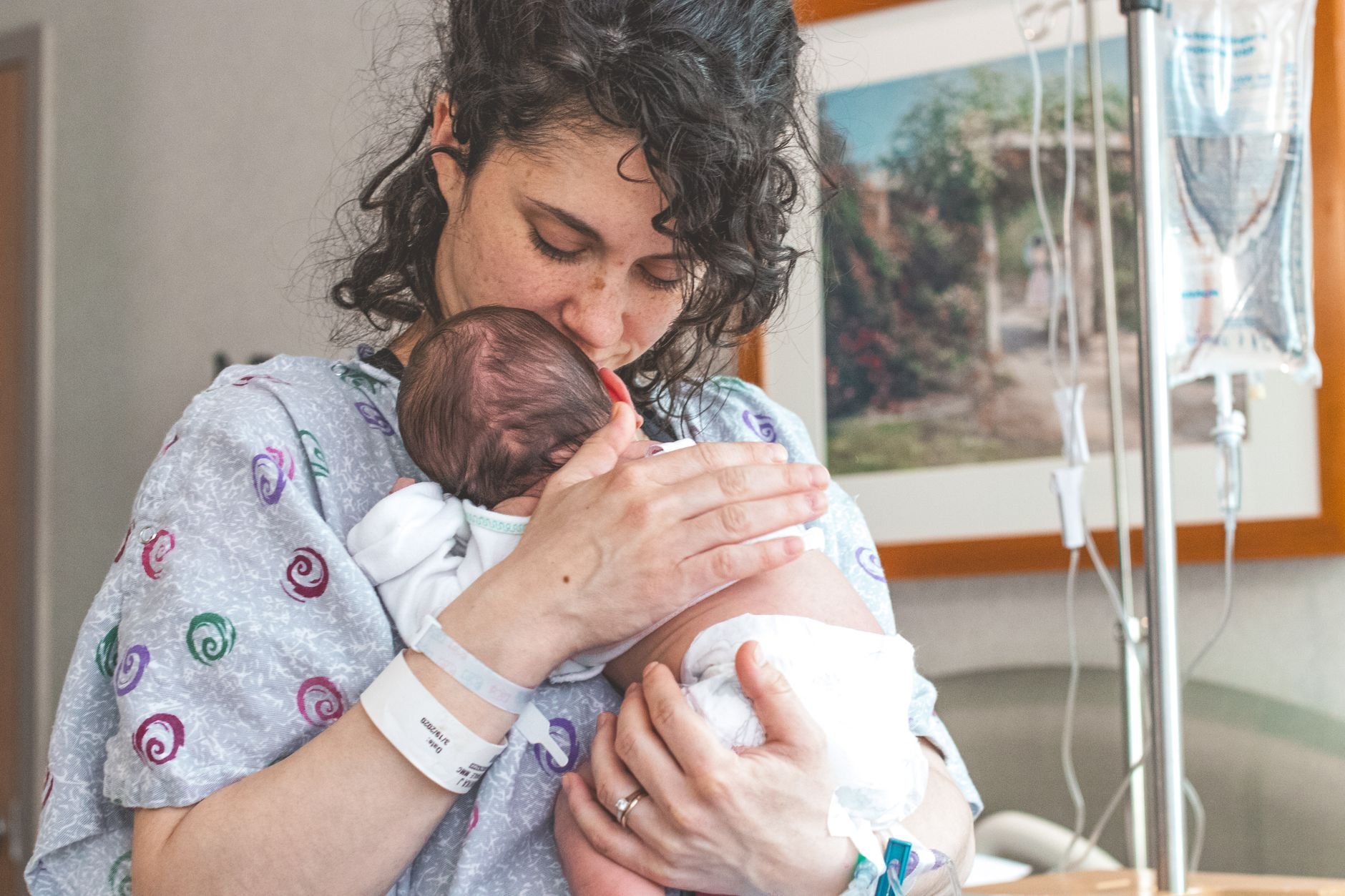
Postpartum is the period after birth, and it covers physical recovery as well as the start of feeding, sleep disruption and a big emotional shift. The hospital stay is a good time to ask questions of the staff who are looking after you and the baby, while help is within reach.
What the first weeks tend to look like
A new mom should expect a newborn who feeds often, sleeps in short stretches around the clock, and cries more than you might have imagined, while you recover from birth and ride a swing of emotions. Frequent feeds, broken sleep and fussy periods are the pattern for the first weeks, not a sign that something is going wrong. The specific ranges for feeding, sleep and crying are in the sections below and in the table near the end of the guide.
The best preparation for that stretch is practical. Lower your standards for the house, say yes to meals and help, and keep the day built around feeding, resting and keeping the baby safe. Every other task can slip.
Recovery after birth
Recovery does not follow a single schedule, so use a timeline as a map, not a deadline. The postpartum recovery timeline lays out what the early weeks commonly involve. If you gave birth by cesarean, the c section recovery tips cover wound healing and daily care in more detail. Ask your own care team what they want you to watch for, since they know your birth and your health history.
Feeding your newborn
Feeding is the biggest part of a newborn’s day, and the clearest guidance is to follow the baby’s hunger, with a typical rhythm in mind. This section covers how to start and how often to feed.
Starting breastfeeding
Breastfeeding usually works better if you begin within an hour of delivery, according to Children’s Healthcare Network. That is a good reason to tell the delivery team early that you plan to breastfeed, so they can help with the first feed. The same source recommends nursing whenever the baby is hungry during the first few weeks, which means you feed on demand and do not wait for a set time.
The longer-term target comes from the American Academy of Pediatrics, reproduced by the Missouri Safe Sleep Coalition: breastfeeding for about six months, exclusive or with expressed milk where possible. Treat that as a goal to work toward with support, not a pass-or-fail test. If it is not going the way you hoped, talk to your pediatrician or a lactation professional early, instead of pushing through alone.
How often a newborn feeds
Newborns eat often, usually every 2 to 3 hours, according to Pathways.org. Read that as a typical rhythm, not a rule. Because the guidance for the early weeks is to nurse whenever the baby is hungry, a baby who asks sooner should be fed sooner. The practical meaning is that your sleep will come in short blocks, and nights will include feeds. The guide on how often should a newborn eat explains hunger cues and cluster feeding, so you can tell a hungry baby from a fussy one.
If you plan to pump, plan storage at the same time. The breast milk storage guidelines cover how long milk lasts and how to thaw it, which saves you from guessing with milk that took effort to produce.
Sleep for the baby and for you
Safe sleep for the baby comes first, and your own rest comes second but still matters. The setup below follows American Academy of Pediatrics recommendations as reproduced by the Missouri Safe Sleep Coalition.
Setting up a safe sleep space
- Back to sleep, every time. Place the baby on the back for every sleep until age 1, including naps.
- Firm surface, nothing extra. Use a firm mattress with a fitted sheet and no other bedding. That means no crib bumpers, blankets, pillows or soft toys in the sleep area.
- Share the room, not the bed. Room-sharing without bed-sharing decreases the risk of SIDS by as much as 50 percent. The AAP advises keeping the baby’s sleep area in your room for at least the first six months, ideally the first year.
- Skip bed-sharing. The AAP says bed-sharing is not recommended for any babies, and specifically advises against it when the baby is younger than 4 months old.
These points work as a checklist for the first night home. If someone offers a gift of a bumper set or a plush blanket for the crib, the answer under this guidance is to keep it out of the sleep space.
What newborn sleep looks like
Newborns may sleep 14 to 17 hours a day, but not all at once, according to Pathways.org. The total can sound generous until you realize it arrives in short pieces. The American Academy of Pediatrics adds on HealthyChildren.org that babies do not have regular sleep cycles until they are about six months old. For planning, that means early routines should stay flexible, because the baby’s own rhythm has not formed yet.
When you want a realistic picture of how sleep changes over time, read the newborn sleep schedule guide. If you later want to compare approaches to teaching a baby to settle, the sleep training methods comparison sets them side by side. Wait on that decision until you have the baby’s pattern in front of you and feel ready, as it is not a first-week task.
Getting more sleep yourself
The most direct advice for getting more sleep with a newborn comes from the American Academy of Pediatrics on HealthyChildren.org: try sleeping when the baby is sleeping. Because newborn sleep arrives in short blocks, this works only if you let other tasks go. A few ways to make it real:
- Nap in the baby’s sleep blocks. Lie down when the baby does, even if you do not fall asleep right away. Dishes and email can wait.
- Hand off care. If a partner, relative or friend is there, let them take the baby for a stretch so you can sleep without listening for crying. Be specific when you ask, such as “take the baby after this feed.”
- Keep the baby close at night. Because the safe sleep guidance is to keep the sleep area in your room, you do not have to walk down a hall for each feed or settle.
- Use a safe swaddle if it helps the baby settle. The AAP says it is fine to swaddle as long as the baby is always placed on the back, and the swaddle must not be so tight that it makes breathing hard or restricts hip movement. The guide on how to swaddle a newborn shows the technique step by step.

Crying, mood and postpartum health
Crying and low mood are both common in the early weeks, and both have a plan. Knowing the pattern ahead of time makes a hard stretch easier to read.
Crying in the early weeks
According to the American Academy of Pediatrics on HealthyChildren.org, babies cry an average of 2 to 3 hours a day in the first six weeks of life. Most babies start crying a lot when they are around two weeks old and continue for about two months. That pattern is an average, so some babies cry less and some more, but it explains why many parents find the stretch after the first fortnight harder than the first days. Plan extra hands and extra rest for that period, and call your pediatrician if you are worried about the crying.
Your mood and emotional health
Feelings of sadness or depression are common after having a baby, as the American Academy of Pediatrics says on HealthyChildren.org. Common does not mean you should wait it out alone. The guide to postpartum depression signs describes what to watch for and when to seek help. If you need someone to talk to now, Postpartum Support International runs a toll-free help line at 1-800-944-4773. Telling your own care provider or your pediatrician how you feel is also a legitimate use of an appointment.
Body changes that surprise people
Recovery is not only about healing. Smaller changes can feel alarming when nobody warned you about them, and hair shedding is a common example. The guide to postpartum hair loss when does it stop covers the timeline and what helps.
Everyday newborn care
Daily care is mostly small routines repeated, and a couple of them deserve a closer look. Use the guides below when you are ready for the task, not before.
- Bathing and cord care. The step-by-step guide on how to bathe a newborn covers the practical sequence, including care of the umbilical cord stump.
- Tummy time. The guide on how long should tummy time be explains how to begin and how to build it into the day.
Fit these tasks around feeds and the baby’s alert moments, not the other way around. If a bath or a tummy time session goes badly, skip it and try later.
Support, gifts and keepsakes
New mothers receive far more help when others know what is useful. If friends and family ask what to do, give them concrete jobs: meals, laundry, holding the baby while you sleep. The same people often want to buy something, and a short list steers them toward gifts you will use.
For ideas that range from practical to pampering, see 25 Thoughtful Gifts For New Moms: Practical, Pampering, And Meaningful Ideas For 2026 – Revolucionmama. If you or someone close to you wants a lasting keepsake of this time, New Mom Jewelry: Meaningful Keepsakes Every New Parent Will Treasure in 2026 – Revolucionmama collects options. Keepsakes are a nice extra, but they come after the safety and care steps above.
Newborn ranges at a glance
This table pulls the numeric ranges from the sections above into one place, so you can scan them at 3 a.m. Treat each as a typical pattern, not a target your baby has to hit.
| Newborn pattern | Typical range | Planning use |
|---|---|---|
| Feeding frequency | Usually every 2 to 3 hours; nurse whenever the baby is hungry in the first few weeks | Expect feeds around the clock, and respond to hunger sooner than the clock if the baby asks. |
| Total sleep | May be 14 to 17 hours a day, but not all at once | Plan your own rest around short blocks, not one long night. |
| Crying | Average of 2 to 3 hours a day in the first six weeks; often starts around two weeks and continues for about two months | Line up extra help for the fussiest stretch. |
| Regular sleep cycles | Not until about six months old | Keep early routines flexible, and wait on formal sleep approaches. |
These figures come from Pathways.org for feeding and sleep totals, and from the American Academy of Pediatrics on HealthyChildren.org for crying and sleep cycles.
Frequently asked questions
When is the first well-baby visit?
The first well-baby visit usually occurs about 3 to 5 days after birth, according to Pathways.org. Having a pediatric office confirmed before delivery makes that appointment easy to book.
Can I drink alcohol while breastfeeding?
The American Academy of Pediatrics recommends avoiding alcohol while breastfeeding. If you do have a drink, breastfeeding or pumping is OK two hours after your last drink. Pumping and discarding milk does not quickly reduce the amount of alcohol in your milk, so waiting is what counts, as HealthyChildren.org explains.
Does breastfeeding affect SIDS risk?
Yes. The American Academy of Pediatrics says any breastfeeding has been shown to be more protective against SIDS than no breastfeeding, as reproduced by the Missouri Safe Sleep Coalition. That makes partial breastfeeding worth keeping up even if exclusive breastfeeding is not possible.
When should I stop swaddling my baby?
Stop swaddling when the baby looks like they are trying to roll over, according to the AAP guidance reproduced by the Missouri Safe Sleep Coalition. Until then, always place a swaddled baby on the back.