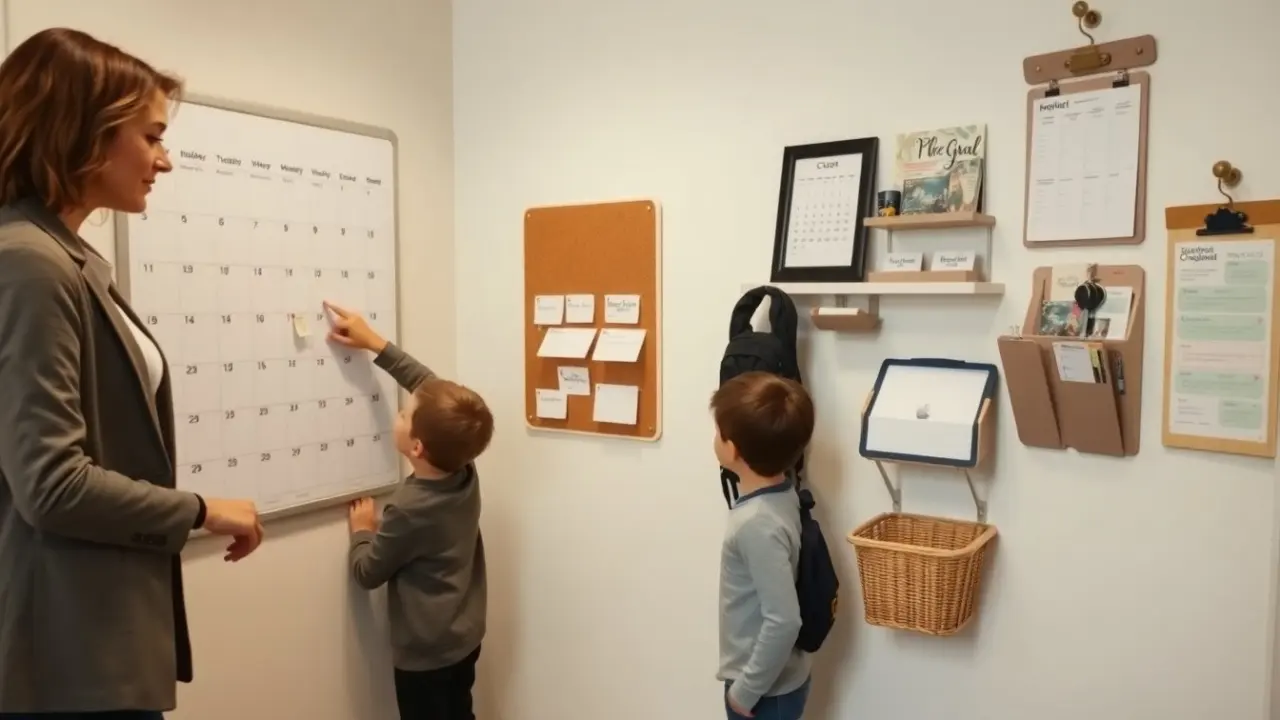
A family command center helps a household stay organized from day one. The family command center holds calendars, keys, mail, and lists in one place. It cuts repeated questions and missed appointments. It fits a wall, a hallway nook, or a coat closet door. This guide shows clear layout ideas, cost-smart tools, and age-appropriate rules to keep the system working.
Key Takeaways
- A family command center centralizes calendars, mail, chores, and daily essentials to enhance household organization and communication.
- Design the command center near main exits or kitchens with clear zones to keep items accessible and reduce clutter.
- Use budget-friendly materials like whiteboards, baskets, and repurposed items, combining analog tools with simple tech for joint visibility.
- Introduce the system with clear explanations, assign age-appropriate tasks to kids, and maintain engagement through praise and routine updates.
- Set specific times to check the command center, model its use as parents, and keep instructions simple to build lasting habits.
- Limit tech notifications to urgent items and hold a weekly family sync to review schedules and celebrate organizational successes.
Why Every Home Needs a Family Command Center
A family command center gives a single place for daily information. It reduces errands and missed events. It improves communication between parents and children. It centralizes calendars, permission slips, bills, and emergency contacts. It creates visible routines for children and reminders for adults. It makes mornings faster and evenings calmer. It lowers stress when someone checks the command center before leaving. It helps a family form habits that last.
Designing a Practical Layout for Your Space
Design decisions begin with the chosen location. A family chooses a spot near the main exit or the kitchen. A simple layout divides the wall into clear zones. A family keeps sight lines open and items reachable by children. A family limits the layout to what people will use every day. A clear layout reduces clutter and keeps attention on the important items.
Essential Zones: Calendar, Mail, Chore, and Launch Pad
A calendar zone shows family schedules in one view. A family uses a shared wall calendar or a magnetic planner. A mail zone sorts incoming items into keep, act, and shred. A family places a simple tray or labeled slots for each person. A chore zone lists daily tasks and assigns responsibilities. A family pins short checklists at child height. A launch pad holds keys, masks, bags, and charging cables. A family adds hooks and a small shelf for quick access. These zones work together to start and end each day with less friction.
Tools, Materials, and Tech That Work On Any Budget
A family selects durable basic materials first. A family buys a large whiteboard, cork strips, and inexpensive baskets. A family uses command strips and screws for secure mounting. A family chooses labeled bins from a dollar store for mail sorting. A family pairs analog tools with simple tech for shared visibility. A family mounts a tablet for synced calendars and reminders. A family uses shared calendar software and a family shopping list app. A family keeps the tablet on a low brightness and a charging dock. A budget-conscious family repurposes frames, clipboards, and an old picture ledge. A higher-budget family adds a smart display for voice reminders. A family tests each piece for two weeks and removes anything unused.
Tips To Implement, Get Buy-In, And Maintain It With Kids
A parent introduces the family command center in a short meeting. They explain what each zone does and why it matters. They assign one small task to each child for the first month. They reward consistent use with praise and small privileges. They review the system weekly and adjust items that cause friction. They keep instructions visible and simple for younger children. They rotate chores and update the chore chart at the end of each week.
A family keeps rules clear. They state when to check the command center: before school and before bedtime. They show children how to add items to the shopping list and how to mark completed chores. They model the habit by checking the calendar and clearing mail in front of the family. They reset the mail tray and wipe the board each Sunday. They archive old notes and recycle unread paper to avoid pileup.
A family sets limits on tech alerts. They mute nonessential notifications and keep notification sounds for urgent items. They schedule a weekly five-minute sync where everyone checks upcoming events. They make the command center a positive tool. They celebrate small wins, such as no missed appointments for a month. They adjust expectations as children age and take on new tasks.