Parents search nursery wallpaper ideas to create a calm, playful room for a new child. This guide lists clear criteria for choice. It shows style options and practical steps. It helps parents pick safe patterns, right scale, and calming color. It sets expectations for installation and future swaps.
Key Takeaways
- Choose nursery wallpaper that is low-VOC, phthalate-free, and flame retardant to ensure safety for your child.
- Select wallpaper scale thoughtfully: small repeats create calm, while large murals add playful focus to feature walls.
- Use soft neutrals and muted pastels to maintain a peaceful nursery atmosphere, adding bright accents for balanced playfulness.
- Opt for durable, washable wallpaper near diaper-changing and play areas, and consider removable or peel-and-stick options for easy updates.
- Test wallpaper samples in your nursery’s lighting and check cleanability before committing to a design.
- Plan installation carefully by priming walls and aligning patterns, and maintain safety by securing edges and heavy decor after installation.
How To Choose The Right Wallpaper For Your Nursery (Safety, Scale, And Color)
Safety matters first. Caregivers should check material labels. They should choose low-VOC and phthalate-free wallpapers. They should avoid loose glitter and raised beads that a child could pull. They should confirm flame-retardant ratings when possible.
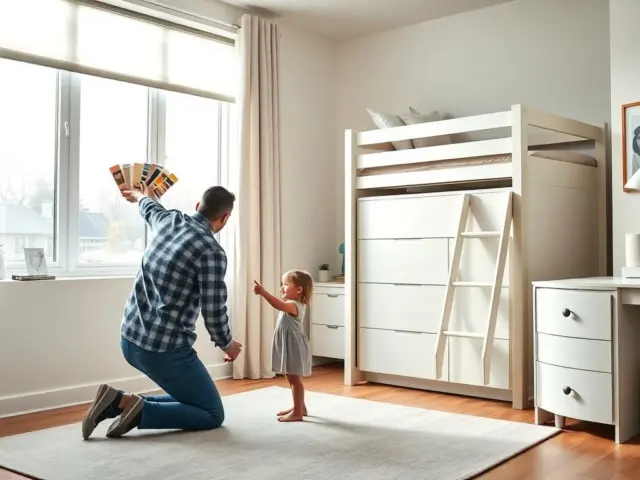
Scale guides mood. Small repeat patterns feel calm at any wall size. Large murals draw the eye and feel playful on a single feature wall. Designers advise testing a sample on the intended wall. They can view pattern scale at different times of day.
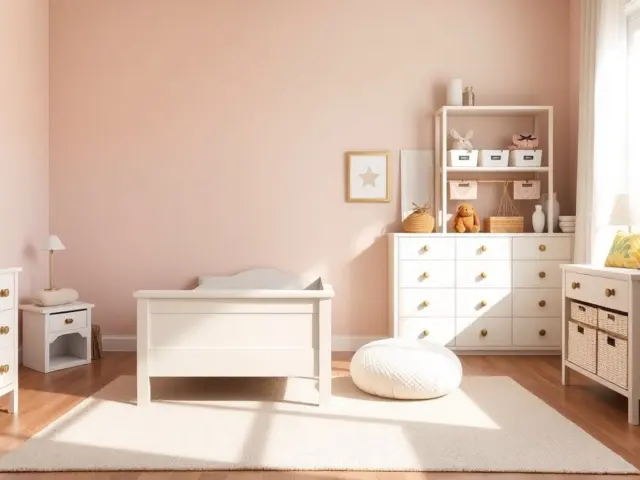
Color sets tone. Soft neutrals and muted pastels create a calm space. Brighter accents add play without overwhelming. Parents can pick a base color for the whole room and add one accent wall. They can use wallpaper with a neutral background and colorful motifs to balance calm with play.
Texture adds depth. Grasscloth or vinyl with subtle texture hides marks and adds warmth. Peel-and-stick textured vinyl offers easy cleaning. Removable wallpaper helps with temporary rental spaces or frequent style changes.
Durability fits use. Parents should prefer washable surfaces near diaper-changing stations and play areas. They should avoid delicate papers on lower walls where scuffs occur. For long-term use, they should choose high-durability vinyl in high-traffic zones.
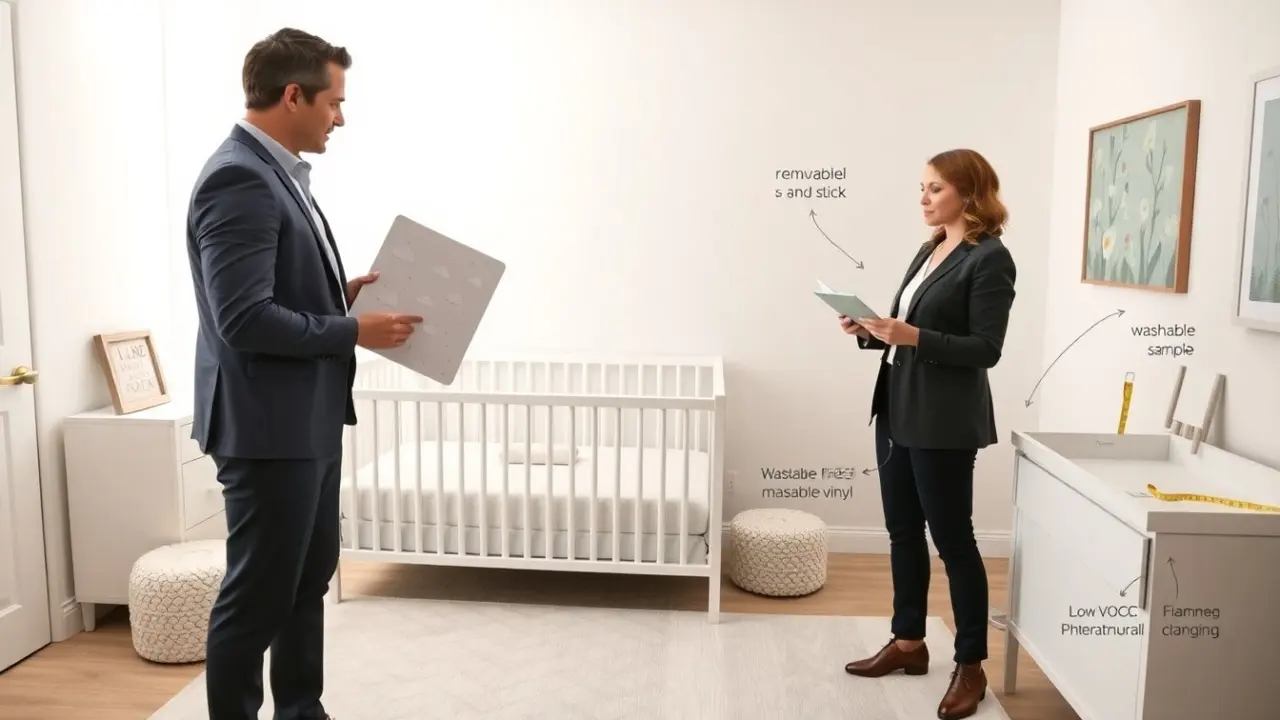
Practical tests matter. They should place samples under nursery lighting. They should run a damp cloth across a sample to test cleanability. They should measure pattern repeat to avoid awkward cuts around windows and shelves.
Style consistency helps. They should match wallpaper to crib finish, rugs, and curtains. They should pick patterns that work with future decor to reduce the need to replace wallpaper as the child grows.
20 Wallpaper Styles And Where To Use Them (From Bold Feature Walls To Subtle Textures)
- Soft clouds in pale blue. Use on one wall behind the crib to create calm.
- Tiny stars on cream. Use on all walls for a gentle night-sky feel.
- Large jungle mural. Use on a single feature wall for play and imagination.
- Monochrome geometric. Use on lower half as a dado for a modern look.
- Watercolor florals in muted tones. Use on an accent wall for a soft, grown-up feel.
- Stripes in soft gray and white. Use vertically to make ceilings feel taller.
- Chalkboard wallpaper. Use on one wall for drawing and learning as the child grows.
- Animal silhouettes in repeat. Use on a changing table wall for a lively spot.
- Textured grasscloth. Use on a focal wall to add warmth and texture.
- Polka dots in soft pastel. Use fully for a playful, light pattern.
- Maps and world scenes. Use on a play wall to spark curiosity.
- Subtle metallic accents. Use sparingly to catch light without glare.
- Scenic mountains in soft tones. Use behind a reading nook for calm focus.
- Removable stickers wallpaper. Use where frequent updates are likely.
- Scandinavian prints in muted palette. Use across the room for a cohesive style.
- Vintage animal prints. Use in a gallery wall mix to add character.
- Ombre wash. Use on taller walls to create a soft gradient effect.
- Tiny checks in neutral tones. Use on all walls for a textured but quiet backdrop.
- Botanical line drawings. Use on a single wall to add subtle interest.
- Bold mural with soft edges. Use on one wall for a strong focal point while keeping other walls neutral.
They should place bold or large patterns only where they want focus. They should use subtle textures to cover whole rooms. They should match wallpaper style to room size. Small rooms benefit from lighter, smaller patterns. Large rooms can handle large-scale murals.
They should test peel-and-stick options for renters. They should use washability as a decision factor near play and feeding areas. They should plan lighting and furniture placement before final selection.
Practical Tips For Installation, Maintenance, And Swapping Designs As Your Child Grows
Preparation speeds installation. Installers should clean and prime walls for best adhesion. They should smooth rough patches and fill holes. They should measure twice and cut once. They should align pattern seams before trimming.
Peel-and-stick saves time. Homeowners can apply removable wallpaper with a squeegee and a steady hand. They should start at a top corner and smooth downward. They should lift gently to reposition before full adhesion.
Traditional paste works well for heavy papers. Installers should apply paste evenly and follow the paper’s soak time. They should use a seam roller to flatten edges and a sharp blade to trim excess.
Maintenance stays simple with the right product. They should dust textured papers with a soft brush. They should wipe vinyl wallpapers with a damp cloth and mild detergent. They should avoid abrasive cleaners that remove ink.
Swapping designs later stays easy with removable options. They should peel slowly at a 45-degree angle to avoid wall damage. They should repair minor drywall dings before applying new paper.
Transition strategies help style changes. They can swap one accent wall first. They can add removable decals over a neutral wallpaper. They can use framed prints on top of wallpaper to change the look without full replacement.
Safety checks continue after installation. They should fasten shelving and heavy decor away from the crib. They should secure loose edges and trim hanging strings to avoid hazards. They should inspect the room regularly as the child grows.