Toddler Christmas activities help families share fun and build holiday memories while supporting early development. This expanded list offers 30+ safe, simple ideas and specific ways to adapt them for different ages, energy levels, and settings. Parents and caregivers will find low-prep games, mess-light sensory crafts, music and story routines, plus calm outdoor options with clear safety reminders, timing tips, and quick cleanup ideas. Each idea uses common household supplies or inexpensive materials and includes a suggested duration so activities fit into nap-friendly schedules and short attention spans.
Key Takeaways
- Toddler Christmas activities are designed to be safe, simple, and engaging, perfectly suited for short attention spans.
- Quick, low-prep games like hide-and-seek and holiday-themed ring toss encourage fun and development within nap-friendly timeframes.
- Sensory crafts use mess-light, safe materials that promote fine motor skills without small parts or glue.
- Music, movement, and storytime routines boost language and gross motor skills with interactive, age-appropriate holiday songs and books.
- Outdoor walks to view holiday lights and calm indoor setups with limited toys provide balanced sensory experiences while ensuring safety and comfort.
- Caregivers should always supervise, choose nonbreakable decorations, and keep activities short to maintain a safe environment for toddlers.
Quick, Low-Prep Holiday Games For Toddlers
Parents pick quick games when toddlers need fast fun or to fill 10–20 minutes between naps and meals. Below are several variations, with materials, approximate duration, and how each supports development:
- Stocking hide-and-seek — Materials: a lightweight stocking and a favorite small toy. Duration: 5–10 minutes. One adult hides the toy in the stocking or under a small blanket; toddler finds it and celebrates. Builds object permanence and attention. For older toddlers, use two stockings and take turns hiding.
- Paper-plate stepping stones — Materials: paper plates or cloth napkins. Duration: 8–12 minutes. Arrange plates across the floor and have the child step from one to the next, or call out “jump,” “tiptoe,” or “spin.” Works balance and listening skills; remove plates for a quieter game when needed.
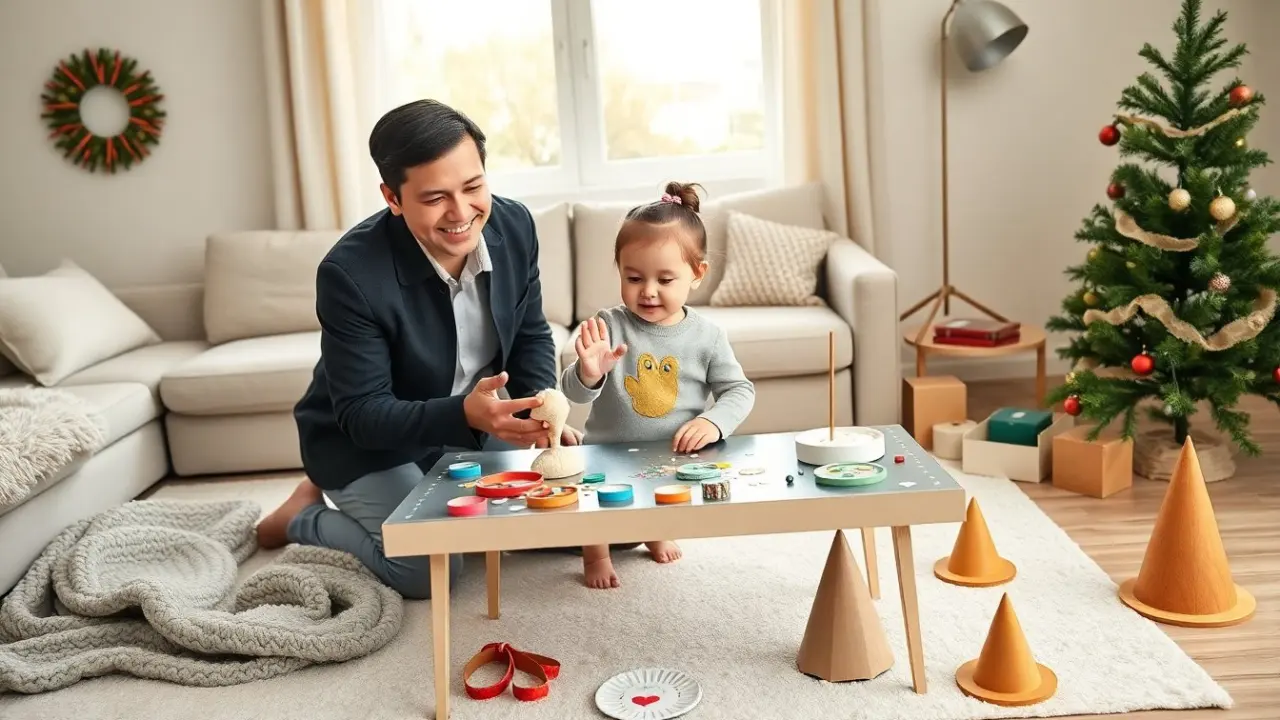
- Holiday ring toss — Materials: cardboard cones or empty paper towel rolls taped to a base, soft rings made from ribbon. Duration: 5 minutes per round. Keep the target low and use short rounds (2–3 minutes) to match toddler stamina.
- Jingle bell roll — Materials: small container with a lid and a couple of large jingle bells. Duration: 5–8 minutes. Let the toddler shake the box and listen for the bells, then roll the box back and forth. Encourages cause-and-effect and auditory attention; use large bells that are secured in the container so there are no loose small parts.
- Color or shape scavenger hunt — Materials: a list or picture prompts, a basket. Duration: 10–15 minutes. Ask toddlers to find “red ornament” or “round ball” around a room or yard. Simple prompts boost vocabulary and following directions. Keep hunts brief and guide the child directly to each item if needed.
Tips for success: limit each game to 5–15 minutes, prepare materials in advance, and have a quiet transition activity ready (book or snack) to help toddlers wind down when attention fades.
Sensory Crafts That Are Safe And Mess-Light
Sensory crafts for toddlers should focus on exploration without overwhelming mess or choking hazards. Choose non-toxic materials, pre-cut large shapes, and supervise closely. Below are ideas with materials, steps, and cleanup tips.
- Sticker collage cards — Materials: large stickers, heavy paper or cardstock, a shallow tray. Duration: 10–15 minutes. Give toddlers a small selection of big, easy-peel stickers to place on a card. Offer gentle praise and narrate choices (“You picked a red sticker!”) to build language. Cleanup: toss leftover backing into a covered bin.
- Shaving cream “snow” tray (mess-light) — Materials: a shallow plastic tray, a small amount of non-menthol shaving cream, large cookie cutters or plastic spoons. Duration: 5–10 minutes. Use a small dab of foam on a tray for sensory play rather than a full table spread. Wipe with a damp cloth afterward.
- Textured holiday collage — Materials: felt scraps, large foam shapes, double-sided tape, paper. Duration: 10–20 minutes. Pre-cut felt shapes and use double-sided tape so toddlers can press pieces to make a scene. Tape makes application simple and keeps glue out of the picture.
- Safe “snow” sensory bag — Materials: zip-top bag, hair gel or water, glitter or sequins that are too large to swallow, duct tape. Duration: calm-down activity, 5–15 minutes. Seal contents well and tape the top; let the toddler squish the bag to move “snow” around. Keep the bag out of reach when not used.
General safety and cleanup tips: place a washable mat under the work area, lay out only a few materials at a time, and choose items larger than a toddler’s mouth. Store finished crafts out of reach until decorative items are safely secured.
No-Glue Or Salt Dough Ornament Ideas
Salt dough and no-glue ornaments make wonderful keepsakes while staying toddler-friendly when adults handle hot or messy steps. Below are clear steps and alternatives for families who prefer zero-heat or no-mess options.
- Salt dough handprints — Materials: 1 cup flour, 1/2 cup salt, 1/2 cup water (adjust as needed), rolling pin, straw for hole, ribbon. Steps: mix and knead dough until smooth; roll to about 1/2 inch thick; press toddler’s hand gently into dough; cut around the handprint with a shallow cookie cutter; use a straw to make a hole for hanging; bake at a low temperature until hard (adult-only step). Once cooled, thread ribbon. Duration: prep and press 10–15 minutes; baking time varies and is an adult task. Tip: make extra dough shapes to keep the toddler engaged while one ornament bakes.
- Sticker and felt ornaments (no-glue) — Materials: sturdy felt shapes, large stickers, pre-cut ribbon loops. Steps: give toddlers felt shapes and let them place stickers to decorate; adults attach the ribbon loop with tape or a single staple (adult step). Duration: 5–10 minutes. This option avoids baking and wet glue entirely.
- Yarn-wrapped cardboard shapes — Materials: cardboard circles or stars, thick yarn, tape. Steps: pre-cut the shape with notches; let toddlers wrap yarn around the shape with help. Secure ends with tape. Duration: 10–15 minutes. Great for fine motor practice without small loose parts.
Always cool baked items fully and supervise with scissors, staples, or tape. Label keepsakes with the child’s name and year for a simple holiday tradition.
Music, Movement, And Storytime Routines
Music and storytime are ideal for repeating short routines that toddlers learn quickly. Keep each segment short, predictable, and interactive to build language, memory, and motor skills.
- Short holiday playlist — Duration: 5–10 minutes per session. Choose four or five very short songs or instrumental jingles. Include actions (clap, stomp, wave a scarf) and repeat the same sequence over several days so toddlers anticipate the moves. Use scarves or soft bells to add tactile and auditory variation.
- Freeze dance — Duration: 30–60 seconds per round. Play a festive tune and encourage movement; pause the music and everyone freezes. Keep rounds brief and celebrate attempts to stop on time. This practices self-regulation and listening.
- Call-and-response songs — Duration: 3–5 minutes. Sing a line and let the toddler repeat a word or action (for example, “Ring the bell—ding!”). Use exaggerated gestures to support comprehension.
- Interactive storytime — Duration: 5–10 minutes. Choose short picture books with repetitive phrases or rhymes. Read a page, point to a picture, and ask one simple question (“Where is the star?”). Act out characters or use puppets. Repeat familiar books to build confidence and vocabulary.
Routine suggestions: follow music with a calm book or cuddle to transition out of high energy. Keep instruments soft and non-sharp, and swap noisy items for quieter ones when in shared spaces.
Outdoor And Calm Indoor Activities Plus Safety Tips
Balance indoor excitement with short outdoor outings and intentional calm spaces. Both provide different sensory experiences and help regulate energy levels.
- Short holiday-light walk — Duration: 10–20 minutes. Bring warm layers, a stroller or carrier for tired legs, and point out colors and shapes. Keep walks brief in cold weather and plan a warm-up routine when you return (warm drink, lap cuddle).
- Calm cozy corner — Setup: soft blanket, battery-operated fairy lights, two favorite toys, a short holiday book. Duration: 10–20 minutes. Limit choices to prevent overwhelm and create a predictable place for quiet play or settling down.
- Snow play alternatives — For families in mild climates or indoors, use a small sensory bin with cotton batting or “fake snow” materials for tactile exploration. Keep items large and supervised and remove anything that could be mouthed.
- Simple outdoor scavenger stroll — Duration: 10–15 minutes. Look for natural items with holiday connections (pinecones, evergreen needles) and talk about textures and smells. Collect only safe items and avoid small pieces.
Safety reminders for all toddler Christmas activities: always supervise closely; choose unbreakable decorations; secure tree and large decor so toddlers can’t pull them down; remove small decorations that pose choking risks; keep battery compartments closed and away from curious hands; check surfaces for sharp edges; and limit activity length to match the child’s cues. Have a basic first-aid kit and emergency contacts handy and keep phone charged during outings.