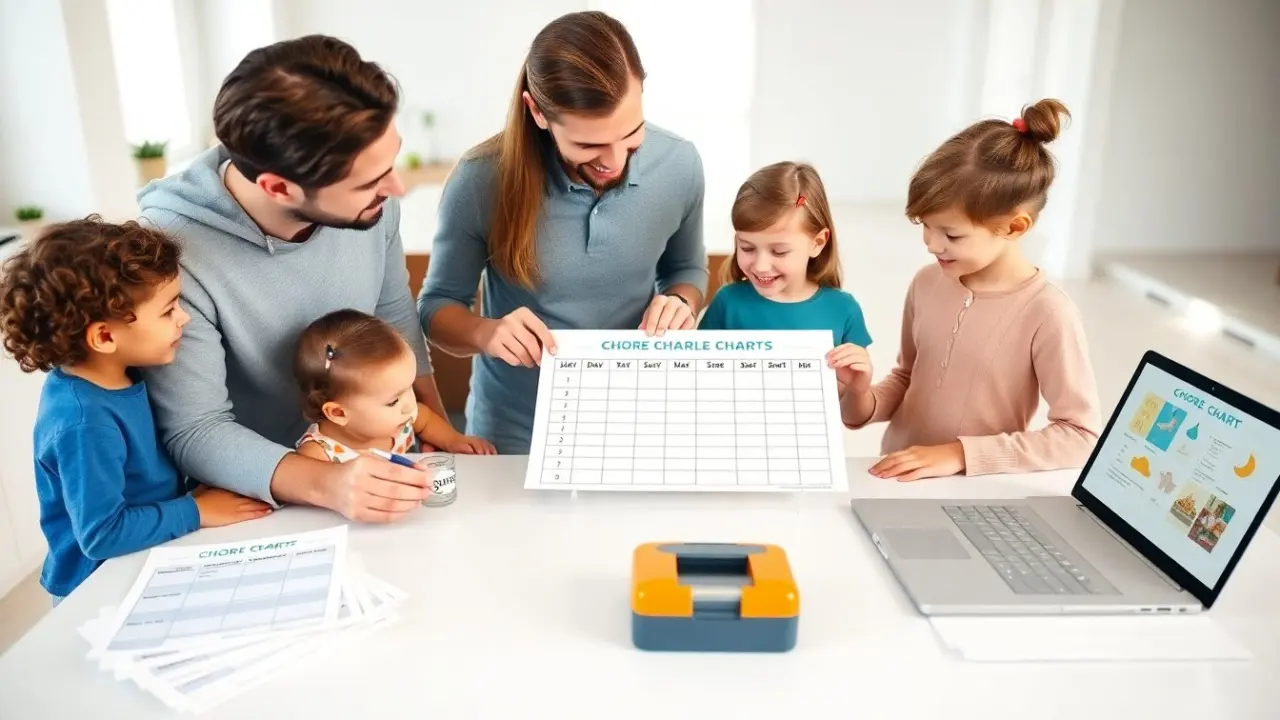
Printable chore chart for kids helps families set clear tasks and track progress. Parents print a chart, assign tasks, and review results. Children see expectations, complete chores, and earn rewards. The chart keeps routines visible and reduces daily reminders. This article explains why charts work, which types fit each age, how to customize charts, tips for success, and where to find quality printables.
Key Takeaways
- A printable chore chart for kids makes responsibilities clear and visible, boosting their confidence and self-control through consistent routines.
- Parents should choose and customize chore charts based on their child’s age and attention span, using visuals or simple verbs to fit their needs.
- Starting with a few tasks and holding regular family meetings helps successfully implement chore charts while keeping the process positive and motivating.
- Linking rewards to effort and consistency rather than perfection encourages sustained participation and reduces conflict.
- High-quality printable chore charts can be found on educational and parenting websites, and printing on durable materials like cardstock or laminated sheets improves usability.
Why Chore Charts Work For Kids (Behavioral Benefits And Developmental Goals)
Parents use a printable chore chart for kids to make behavior visible. The chart shows tasks, time, and reward. Children read the chart, attempt tasks, and gain a sense of progress. Teachers and child psychologists report that consistent routines increase confidence and self-control. A chart breaks larger duties into small steps that a child can handle. Regular completion builds habit and skill. Parents then reduce verbal reminders. The chart also creates clear expectations. Clear expectations lower conflict and create steady gains in responsibility.
On a behavioral level, chore charts bring structure: the repeated cue (the chart) and routine (the task) followed by a reward (praise, sticker, points) helps form automatic habits. Developmentally, charts scaffold executive skills—planning, task initiation, and working memory—by externalizing what the child must do and when. For younger children, charts provide visual anchors that support language and comprehension; for older kids, charts teach time management and accountability. Over time, children internalize the routine and require less external prompting, which is a key parenting goal.
Types Of Printable Chore Charts And When To Use Each
Parents pick a printable chore chart for kids based on age, attention span, and goals. Each chart type suits specific needs. The following options help parents match tools to children.
Basic weekly grids: Simple rows for chores and columns for days. Best for school-age children who can read and follow a routine. Use checkboxes, Xs, or stickers for completion.
Daily task strips: Short lists for morning or evening routines. Ideal for younger children who need repetition and shorter lists—think three to five items such as “brush teeth,” “get dressed,” “make bed.”
Picture-based charts: Use photos or icons instead of words. Designed for preschoolers and non-readers. Parents can photograph a child performing the task or use clear icons so the child recognizes the action immediately.
Point systems and charts with cumulative rewards: Assign points for tasks and trade points for privileges or items. Good for older children who respond to longer-term incentive structures and for teaching delayed gratification.
Rotation or deep-clean charts: Assign less-frequent chores (vacuuming, cleaning the bathroom) on a rotating weekly or monthly schedule. Useful for families wanting equitable distribution of larger household tasks.
Choice-based charts: Present a short menu of acceptable chores and allow the child to choose a set number each day. This increases autonomy and works well for kids who resist direct assignment.
Magnetic or dry-erase boards: Reusable formats that let families move magnets or write daily. These are high-visibility and economical for frequently changing routines.
Knowing when to use each: pick picture-based for 2–5 year olds, basic grids for 6–10 year olds, point systems or rotation charts for 11+ kids, and choice-based approaches when you want to increase buy-in. Combine types (e.g., picture-based morning strip plus weekly grid) to cover different needs.
How To Customize A Printable Chore Chart For Your Family
Parents customize a printable chore chart for kids by changing tasks, layout, and rewards. They list age-appropriate chores and set a daily or weekly rhythm. Parents use photos for non-readers and short verbs for readers. They assign chores by day or by person. Families decide points, stickers, or stars as a tracking method. Parents include a review slot where they note progress. They adjust difficulty after two weeks. Small adjustments keep the chart useful and fair.
Concrete steps to customize:
- Inventory household needs: note the tasks that must get done daily, weekly, and monthly.
- Match chores to capability: toddlers can put toys in a bin, preschoolers can feed a pet with supervision, elementary-age children can clear their plates, and older kids can do laundry or handle trash duties.
- Choose visuals and language: use photos, clip art, or clear verbs; keep instructions to a single phrase per task (for example, “Put away toys” or “Set the table”).
- Decide tracking method: stickers for immediate feedback; checkmarks for simple logs; points for cumulative rewards; stars for behavior-focused charts.
- Set realistic expectations: start with two to four daily tasks per child, and increase as habits form. Include flexible slots for days when schedules vary.
- Define rewards and natural consequences: balance tangible rewards (small toys, screen time) with natural ones (more allowance, choice of family activity). Also define non-punitive responses to missed chores, such as reviewing the chart together or adjusting tasks.
- Create a review plan: schedule a weekly check-in to celebrate wins, troubleshoot problem tasks, and rotate or replace chores if they’re no longer appropriate.
Customization is iterative—expect to tweak layout, wording, and rewards over a few cycles until the chart matches family rhythms and each child’s developmental stage.
Practical Tips For Implementing Chore Charts Successfully
Parents introduce a printable chore chart for kids with a family meeting. They explain tasks and show how to mark completion. Parents start with few tasks and add more later. They set a consistent check-in time, such as after dinner. Parents use praise that names the action, for example, “She folded clothes, good job.” They link rewards to effort and consistency, not perfection. Parents avoid punishment tied to the chart. They remove a task if it causes daily fights. This keeps the chart a positive tool.
Additional implementation tips and troubleshooting:
- Model and teach: demonstrate each chore, do the task together until the child can complete it independently, and provide a checklist or short steps if needed.
- Keep it short and predictable: too many tasks or variable expectations reduce compliance. Limit daily lists and keep routines consistent for several weeks to form habit.
- Use immediate positive feedback: young children benefit from praise or a sticker right after finishing; older kids may prefer a points update or verbal recognition during weekly review.
- Make it visible and accessible: place the chart where the family gathers—on the fridge, in the mudroom, or at kid eye level. Ensure markers, stickers, or magnets are within reach.
- Anticipate resistance: offer choices, allow swapping comparable chores, and use natural incentives tied to privileges the child values. Avoid escalating punishment if tasks are missed; instead, ask what got in the way and problem-solve together.
- Adapt for special situations: when schedules change (travel, illness), simplify the chart temporarily and resume gradual expectations afterward.
- Track progress in multiple ways: combine daily checkboxes with a monthly summary to highlight sustained effort and growth.
With clear teaching, consistent follow-up, and small, achievable expectations, chore charts become tools that teach responsibility while reducing daily conflict.
Where To Find High-Quality Free And Paid Printable Chore Charts (And Printing Tips)
Parents find printable chore chart for kids templates on education sites, parenting blogs, and craft marketplaces. Free charts often cover basic needs. Paid charts add design, tracking tools, or app integration. Parents pick a file type that prints cleanly at home, such as PDF. They print on cardstock for durability. Laminating a chart allows reuse with dry-erase markers. Parents use sticker paper for easy sticker placement. They test print a page to check margins and colors before a full print run.
Printing and material tips:
- File formats: choose PDF for predictable layout; PNG or JPG can work for single-page images.
- Paper and finish: print on 65–110 lb cardstock for a sturdy chart; consider glossy or matte laminating for wipe-clean reuse.
- Size and placement: 8.5″ x 11″ fits most home printers; larger sizes (tabloid or poster) are useful for family command centers but may require a print shop.
- Consumables: use removable stickers or dry-erase markers on laminated charts so you don’t waste printouts; magnetic backing converts a printed chart into a fridge-friendly tool.
- Test before committing: print a draft to ensure icons are legible and margins fit your frame or clipboards.
Whether you use a free basic grid or invest in a customizable paid template, the most important factor is regular use: a well-designed printable chore chart for kids only works if it becomes part of the family routine and is reviewed consistently.