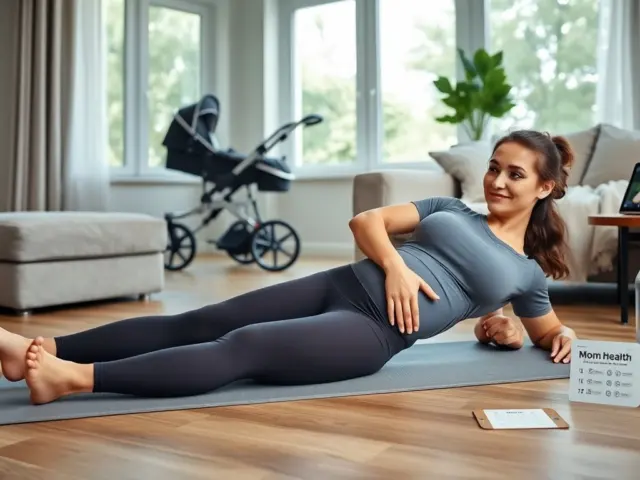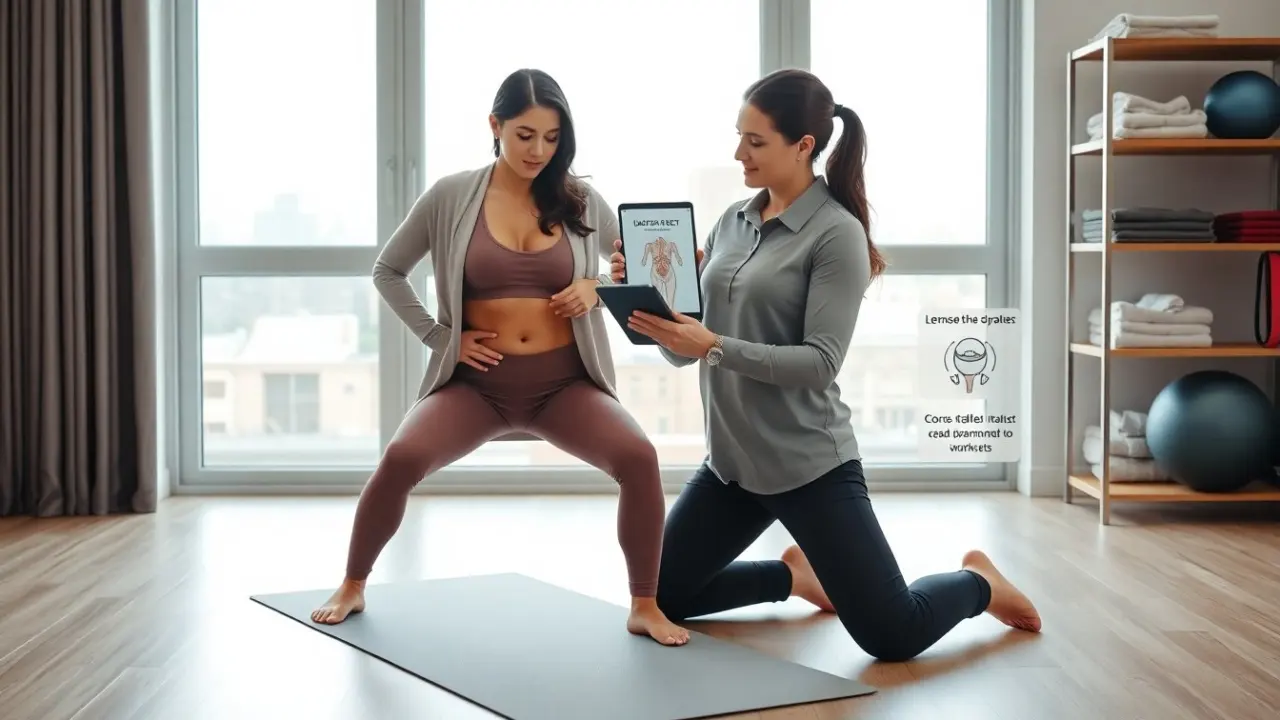
A postpartum ab workout helps a new mother rebuild core strength after birth. The plan starts safely and checks the linea alba for separation. It uses breathing, alignment, and pelvic floor work. The program progresses slowly across 12 weeks. It aims to reduce pain, improve posture, and restore function with clear steps.
Key Takeaways
- A postpartum ab workout safely rebuilds core strength by focusing on breathing, alignment, and pelvic floor activation starting only after medical clearance.
- Self-testing for diastasis recti helps guide whether to progress with the postpartum ab workout or seek professional assessment for larger gaps or painful bulges.
- The workout progresses gradually over 12 weeks in three phases, starting with breathing and pelvic floor exercises and advancing to load and functional tasks to restore core function.
- Maintain neutral alignment and gentle pelvic floor contractions during exercises, increasing reps before adding resistance to avoid strain or pain.
- Modify exercises based on symptoms and consult a pelvic health specialist if experiencing sharp pain, worsening bulge, or urinary leakage to ensure safe recovery.
When To Start: Safety, Timeline, And The Diastasis Recti Check
A woman should wait for medical clearance before starting a postpartum ab workout. A typical wait is six weeks after an uncomplicated vaginal birth and longer after a cesarean or complications. She should rest until bleeding decreases and wounds heal. A clinician should clear any new pain, heavy bleeding, or fever. The postpartum ab workout must begin with gentle breath and pelvic floor work. Early work reduces strain on healing tissues and sets a safe foundation.
How To Self-Test For Diastasis Recti And What Your Results Mean
A mother can self-test for diastasis recti lying on her back with knees bent. She places fingers along the midline above and below the navel. She lifts her head slightly and notes any gap or soft bulge. A gap wider than two finger widths or a bulge that changes with pressure suggests diastasis recti. A small gap with strong tension and no bulge suggests safe progression. If the gap is large or the bulge is painful, she should seek professional assessment before continuing the postpartum ab workout.
Core Principles Of Postpartum Rehabilitation
The postpartum ab workout should follow clear principles. First, breathing must guide movement. She inhales to expand the rib cage and exhales to draw the lower belly toward the spine. Second, alignment must remain neutral. The pelvis and ribcage should rest in a stable position during exercises. Third, pelvic floor integration must come first. She contracts the pelvic floor lightly with each exhale. Fourth, progression must be gradual. She only increases load when the movement feels stable and pain-free. These rules reduce risk and improve outcomes.
Breathing, Alignment, Pelvic Floor Integration, And Progression Rules
Breathing cues must stay simple. She inhales through the nose and exhales through the mouth while drawing the lower belly inward. Alignment cues must stay clear. She keeps a neutral spine and avoids arching the lower back. Pelvic floor cues must stay gentle. She lifts and draws the pelvic floor inward without squeezing the buttocks. Progression rules must stay strict. She increases reps, not force. She moves from supine to upright positions when stability is consistent. The postpartum ab workout uses these cues every session.
Sample 12-Week Postpartum Ab Workout Plan (Beginner To Intermediate)
The 12-week postpartum ab workout divides into three phases. Phase 1 runs weeks 1–4 and focuses on breathing and pelvic floor. Phase 2 runs weeks 5–8 and adds anti-extension and rotation control. Phase 3 runs weeks 9–12 and builds load and functional carry. Each week includes three short sessions. Sessions last 15–25 minutes. Frequency stays at three times per week early and can increase to four times per week in phase 3 if cleared by a clinician. Progress depends on pain-free movement and a steady diastasis response.
Week-By-Week Exercises, Sets, Reps, And Progressions
Weeks 1–4: Postpartum ab workout starts with breathing and pelvic floor holds. Exercises: diaphragmatic breath with pelvic floor hold (5 reps, hold 3–5 seconds), heel slides with core brace (8–10 reps), pelvic tilts (10–12 reps). Weeks 5–8: Add anti-extension work. Exercises: dead bug (8–10 reps each side), bird dog (6–8 reps each side), side-lying clamshells for hip control (10–12 reps). Weeks 9–12: Add load and functional tasks. Exercises: standing pallof press (8–10 reps each side), suitcase carry (30–60 seconds each side), modified plank to 30–45 seconds. Progress by increasing reps first, then sets, then resistance. She stops if a bulge worsens or pain appears.
Modifications, Red Flags, And When To See A Professional
The postpartum ab workout must adapt to symptoms. Modifications include reducing range of motion, lowering reps, and returning to simpler breathing drills. A red flag is sharp pain in the abdomen, pelvis, or incision. A red flag is visible or worsening bulge at the midline with effort. A red flag is new urinary leakage or heavy bleeding. She should see a pelvic health physical therapist for persistent diastasis, pain, or functional limits. A clinician can offer manual care, loading plans, and safe progressions tailored to her needs.