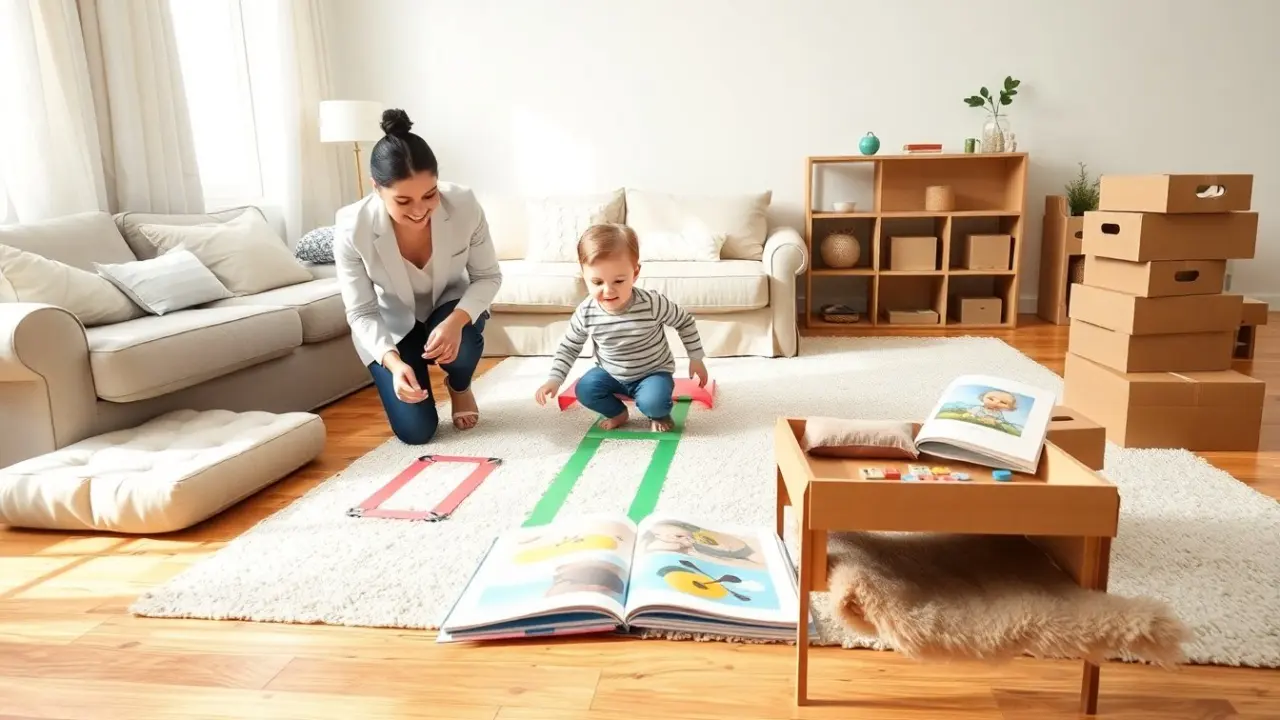
Indoor toddler activities help caregivers fill short bursts of time with safe play. The list below gives 25 low-prep ideas for small spaces. Each idea uses common items and simple rules. The goals are to burn energy, build skills, and keep toddlers engaged. The tips suit caregivers who need quick wins and predictable routines.
Key Takeaways
- Indoor toddler activities use common household items to safely burn energy and build skills in small spaces.
- Setting up an indoor obstacle course with pillows and tape enhances balance and coordination through fun movement.
- Creative sensory play like yogurt finger painting and box construction encourages exploration and creativity.
- Quiet learning activities such as puzzles and reading aloud support focus, language, and confidence.
- Including toddlers in daily routines turns chores into valuable learning and motor skill-building opportunities.
- Consistent indoor playtime routines keep toddlers engaged while matching their attention spans and developmental needs.
Active Movement Games To Burn Energy Safely Indoors
Toddlers need movement several times a day. Caregivers set a clear play area. They move furniture to create open floor space. They use soft items to cushion trips and falls.
Build A Simple Indoor Obstacle Course (Furniture, Pillows, Tape)
Caregivers arrange pillows, chairs, and tape for lanes. They show the toddler each station. Toddlers crawl under tables, step over pillows, and walk on taped lines. Caregivers time short runs or count repetitions. They vary the course to practice balance and coordination. They keep runs brief and praise effort.
Dance, Freeze, And Movement Songs For Motor Skills
Caregivers play upbeat songs and dance with toddlers. They stop the music and say “freeze.” Toddlers hold a pose until the music returns. Caregivers add simple moves like jumping, spinning, and marching. They name body parts while moving to build vocabulary. They use short songs to match toddler attention spans.
Creative Arts And Sensory Play Ideas With Everyday Materials
Toddlers explore textures and colors with safe materials. Caregivers pick items that wash easily and pose no choking risk. They supervise at all times.
Finger Painting With Yogurt Or Edible Paint
Caregivers mix plain yogurt with a few drops of food coloring. They spread paper on the floor and place the toddler on a towel. Toddlers use fingers and palms to make shapes. Caregivers name shapes and colors while the child paints. They wipe hands and surfaces after five to ten minutes.
Box Play And Simple Construction
Caregivers save clean cardboard boxes and masking tape. They cut doors and windows for crawling and peeking. Toddlers push small cars through box tunnels and stack lightweight boxes. Caregivers add stickers and crayons for decoration. They let the toddler lead the play and choose how to use the boxes.
Sensory Bins With Rice Or Pasta
Caregivers fill a shallow bin with dry rice or cooked pasta cooled to room temperature. They hide small, safe toys for the toddler to find. Toddlers scoop, pour, and sort with measuring cups. Caregivers name items and count finds to link play and early math.
Quiet Learning Activities And Daily Routines Toddlers Can Do
Quiet activities build focus and routine. Caregivers pick short tasks that match toddler skill levels. They keep supplies reachable and labeled.
Simple Puzzles And Stacking Toys
Caregivers offer chunky puzzles and rings. Toddlers try one or two pieces at a time. Caregivers show how to match shapes and colors. They celebrate small successes and repeat favorite puzzles to build confidence.
Reading Aloud And Picture Walks
Caregivers sit with the toddler and point to pictures. They name objects and ask simple questions. Toddlers point back and mimic words. Caregivers choose books with strong images and short text. They pause to let the toddler turn a page or repeat a phrase.
Daily Routines As Learning Moments
Caregivers include toddlers in simple chores. Toddlers toss soft laundry into a basket. They help wipe low tables with a damp cloth. Caregivers narrate each step to model language. Toddlers learn sequence and build motor skills while they help.