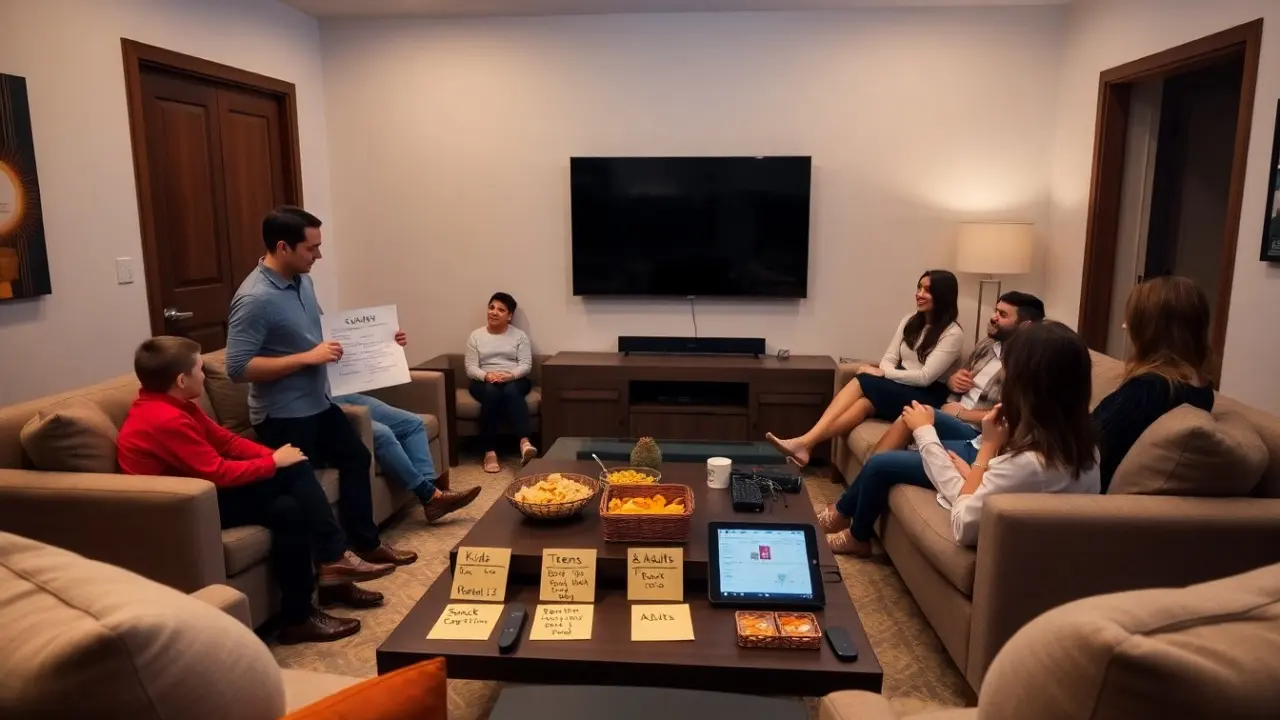
They plan a family movie night to bring everyone together. The host picks a time, the group picks a movie, and they set simple rules. This guide lists ideas and steps that help them pick films, make snacks, set a cozy space, add short activities, and manage tech. It aims to make each family movie night feel easy and memorable.
Key Takeaways
- Planning family movie night involves choosing movies suited to all ages and moods, with clear labels to help pick themes and run times.
- Creating a cozy, distraction-free viewing space with soft lighting, comfortable seating, and designated snack and clutter areas enhances the experience.
- Engaging everyone with short activities before, during, and after the film keeps attention and adds fun to family movie night.
- Establishing a simple schedule with assigned and rotating roles ensures smooth coordination and shared responsibility.
- Using a shared calendar with the label “family movie night” helps organize sessions, hosts, and feedback for continuous improvement.
- Keeping a running list of favorite and less successful movies refines future family movie night selections.
Choose The Right Movies For Every Age And Mood
They choose films that match ages and moods. They sort movies into three piles: kids, tweens, and adults. They label each pile with clear notes: humor level, scares, run time, and themes. They pick one safe family film, one short film, and one surprise pick. They set a simple rule: no spoilers and no veto after the first round. They use the label “family movie night” on their calendar to remind everyone. They keep a running list of hits and misses to refine choices next time.
To make selections easier, they keep a few repeatable categories on hand: animation or adventure for high-energy nights, gentle comedies for winding down, and light mysteries for older kids. For age-safety, they check ratings and preview scenes when possible, and note any content to avoid (language, intense scenes, etc.) so parents can flag films ahead of time. If tastes vary, they sometimes pick a double-feature: a short family-friendly opener followed by a longer pick for older viewers while younger kids head to bed.
When mood is the guide, they match film length to how much time the group has—shorter films or specials on busy nights, longer epics for a weekend marathon. They also rotate who chooses the official “pick” so every family member gets a chance to introduce a favorite movie or theme.
Create A Cozy, Distraction-Free Viewing Space
They clear a room and set soft lighting. They place pillows and blankets within reach. They silence phones and set one central charger away from seating. They dim overhead lights and add one lamp for safety. They close doors and hang a simple sign that says “family movie night.” They arrange seating so everyone can see the screen and the sound reaches all ears. They place a small basket for returned dishes to avoid clutter. They keep a low table for snacks and a trash bin nearby.
Practical touches make the space feel special: arrange seating in tiers (chair, couch, floor cushions) so sight lines are good, and create a snack station away from the main seating to reduce spills. Consider soft rugs or a throw quilt for littlest viewers and a small table for glasses or remotes. For households with hearing or vision needs, add closed captions, headphones, or reposition audio to be clearer; test these before start time.
Set basic tech checks into your routine: quick screen/streaming test, volume check, and a short note of where spare batteries or chargers live. A simple checklist taped near the TV—lights, volume, captions, trash—can cut down on interruptions and keep the room distraction-free for a relaxed family movie night.
Engage Everyone With Activities Before, During, And After The Film
They plan one activity before the film to build excitement. They run a two-minute trivia or let kids set the scene with simple props. They ask one question at intermission to keep attention. They run a five-minute recap after the film so each person shares one favorite moment. They assign short roles: snack captain, remote keeper, and timer. They change roles each week so everyone helps. They avoid long games that stretch the night and keep activities to short, clear tasks that add fun.
Before the movie: try a one-question poll (silly or serious), a two-line dramatic reading of the film’s logline, or a quick craft like making simple paper tickets. During the film: use a quiet “bingo” card with things to spot (e.g., a laugh, a car chase, a song) for older kids, or a soft toy pass for younger viewers so everyone gets a turn without disrupting the movie. At intermission, stretch legs with a themed snack swap or a one-minute guessing game tied to the plot.
After the credits, make the recap inclusive: ask everyone to name one thing they liked, one thing they learned, and one question they still have. This builds conversation without turning movie night into a long discussion. Keep a notebook labeled “family movie night notes” to record favorite lines, characters, and ideas for next time.
Plan A Simple Schedule, Roles, And Ways To Rotate Responsibility
They create a short schedule with clear times: gather, snack, start, intermission, and end. They assign roles the day before. They rotate roles so each person leads once per month. They keep role cards simple and visible. They set a five-minute grace period for late arrivals. They ask one person to track time and another to handle clean up. They log feedback after each night to improve the next plan. They use the label “family movie night” on their shared calendar to assign hosts and roles.
A sample, flexible timeline helps: 7:00–7:10 gather and snacks, 7:10–7:15 quick rules and role call, 7:15–8:45 movie, short intermission if needed, 8:50–9:00 wrap-up and clean. Use a shared calendar event titled “family movie night” with notes for who’s bringing what and any content warnings. For rotating responsibility, make a simple weekly checklist (host, snacks, tech, cleanup) that can be swapped in advance so expectations are clear.
Keep improvement simple: after a night, the host sends one-line feedback—what worked and what to tweak—and add it to the running favorites list. Over time this creates a reliable rotation and a quick reference for which films and formats consistently make for the best family movie night experiences.