Family game night basket ideas help families plan a lively evening quickly. The list below gives ready-made themes with items, game choices, and simple presentation tips. Each idea keeps setup short and fun. The suggestions fit small budgets and common household items. They work for kids, teens, and adults. The article shows what to include and how to present each basket clearly.
Key Takeaways
- A family game night basket should include a main board game, a quick card game, snacks, and essential supplies like napkins and a timer for smooth play.
- Theme-based baskets like Classic Board Night, Cooperative Play, or Outdoor Game baskets keep setup fun, quick, and suited for all ages.
- Use budget-friendly tips like thrifting games, buying snacks in bulk, and repurposing containers to create affordable family game night baskets.
- Label each basket with its theme and include a concise cheat sheet summarizing rules, setup, and winning conditions to simplify game nights.
- Rotate basket themes regularly and involve family members in suggesting games to maintain engagement and fresh experiences.
- Keep baskets compact and well-organized with padding and secure small pieces to ensure easy transport and seamless gameplay.
Essentials For Every Family Game Night Basket
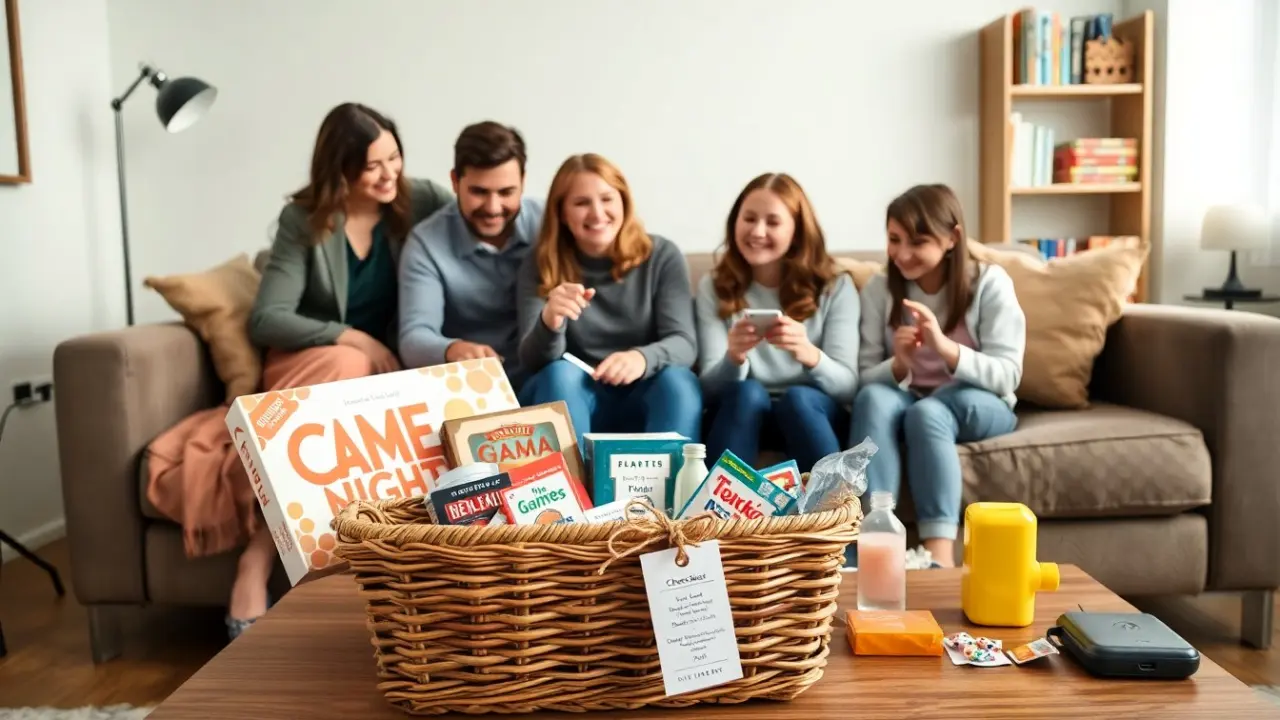
Every good family game night basket includes a mix of games, snacks, and small comforts. The organizer should pick one main board game and one quick card game. The basket should contain napkins, a small trash bag, and a bottle of water or a pack of juice. The basket should include a timer or a phone charger. The host can add a simple score pad and a pen. The basket should also include a themed snack and a small treat. The planner should check ages and player counts before packing. The packer should favor games that take under one hour and that welcome four or more players. The basket should offer variety to avoid long pauses between rounds. The builder can swap items for dietary needs and allergies. The buyer can use dollar stores, thrift shops, and online deals to keep costs low. The basket should stay compact so the family can carry it to living rooms, porches, or picnic tables. The organizer should label the basket with the theme and a quick rule cheat sheet for each game. The rule sheet should list setup, playing time, and winning conditions in three sentences or fewer.
Theme-Based Basket Ideas With Example Contents
- Classic Board Night basket. Include a family board game like Monopoly or Ticket to Ride, a set of classic playing cards, pretzels, and a deck of spare dice. Add a rule cheat sheet and a small cloth for spills. 2) Quick Play basket. Include two fast games like Uno and Sushi Go, popcorn packets, a small timer, and sticky notes for scorekeeping. 3) Cooperative Play basket. Add Pandemic or Forbidden Island, honey sticks, and a guide card that lists cooperative tips. 4) Card Game Night basket. Pack a premium card deck, Exploding Kittens or Uno, chips, and a card holder. 5) Puzzle & Trivia basket. Include a 500-piece puzzle, a trivia card pack, snack bars, and a lamp clip for evening play. 6) DIY Craft-Game basket. Add materials for Pictionary, a whiteboard or paper pad, washable markers, and a sand timer. 7) Outdoor Game basket. Include frisbee, giant Jenga, water bottles, and sunscreen. 8) Movie-Game hybrid basket. Add a family movie, bingo cards tied to movie moments, candy, and cozy socks. 9) Language & Learning basket. Pack Scrabble or Boggle, small flashcards, healthy snacks, and a score pad. 10) Teen Strategy basket. Include Catan or Azul, premium snacks, and a rule summary. 11) Two-Player Date Night basket. Add a compact two-player game like Jaipur, chocolate, and a small candle. 12) Budget-Friendly basket. Use thrifted games, homemade snacks, a printable rule sheet, and a small cloth bag. Each theme uses simple items. Each theme keeps setup under five minutes. Each theme works for mixed-age groups with slight rule changes. The packer should list substitutions on a small card. The host should aim to include one game that introduces new skills and one familiar favorite. The buyer should check that each game includes all pieces before sealing the basket.
Assembly, Presentation, And Budgeting Tips
The assembler should gather items on a flat surface. The assembler should group items by function: games, snacks, supplies. The assembler should add padding like tissue paper or a tea towel. The assembler should place heavier items at the bottom. The assembler should secure small pieces in labeled bags. The assembler should attach the rule cheat sheet to the lid or handle. The assembler should use ribbon or twine to keep the basket tidy. The presenter should add a printed tag with the theme name and approximate play time. The presenter should photograph the basket for reference or for resale. The budgeter should set a clear per-basket limit before shopping. The budgeter should compare prices for used and new games. The budgeter should watch for bundle deals at stores and online. The budgeter should consider buying generic snacks in bulk and dividing them across baskets. The budgeter should repurpose household containers as baskets to cut costs. The budgeter should plan for occasional replacement of missing game pieces. The planner should keep a small repair kit with glue and spare dice. The host should rotate themes weekly to keep interest high. The host should solicit game suggestions from family members and update the cheat sheets accordingly. The host should store rule sheets and replacement parts together for easy refill. The host should label storage with the theme and contents to save time when preparing future baskets.