Easy toddler activities help caregivers keep toddlers busy and learn. This list gives clear, simple ideas that need little prep. Each activity helps motor skills, language, or focus. Caregivers can pick activities based on time, space, and materials. The ideas work at home, daycare, or on short outings.
Key Takeaways
- Easy toddler activities require minimal preparation and use common household items to support motor skills, language, and focus.
- No-prep indoor games like hide-and-seek with soft toys or pillow forts engage toddlers with cause and effect learning.
- Short outdoor activities such as nature walks and bubble chasing help toddlers burn energy and develop gross motor skills.
- Quiet-time activities like simple puzzles and deep breathing exercises build toddlers’ attention and self-control.
- Creative arts and crafts, including finger-painting and collages, enhance fine motor skills and language development.
- Sensory play with items like textured trays or water bowls offers quick, engaging ways to stimulate toddlers’ senses and learning.
No-Prep Indoor Activities Toddlers Love
Toddlers respond well to simple play. Caregivers can play hide-and-seek with a soft toy. They can sing a short song and clap along. They can make a pillow fort and read a short book inside. They can line up plastic cups and knock them down. They can sort socks by color or size. They can dance to one or two songs and practice stopping on a cue. Each activity uses common items and teaches cause and effect. Easy toddler activities like these fit a busy day and need no special tools.
To make these no-prep indoor activities more effective, add small twists: use different voices during hide-and-seek to build language, count the cups aloud when knocking them down to introduce numbers, or add a simple choice (“Do you want the red sock or the blue sock?”) to promote decision-making. Rotate a few favorite options through the day so toddlers have variety without extra prep. Keep safety in mind—remove small choking hazards and supervise climbing in pillow forts. Aim for short, high-quality interactions (2–10 minutes) that match toddler attention spans.
Short Outdoor Activities For Fresh-Air Energy
Toddlers move more outside. Caregivers can take a short nature walk and count leaves. They can roll a ball back and forth for ten turns. They can play follow-the-leader on a sidewalk and practice big steps. They can blow bubbles and chase them. They can draw with sidewalk chalk and name colors. They can collect small sticks and build a short line. These easy toddler activities use fresh air to burn energy and build gross motor skills in fifteen minutes or less.
Make outdoor time richer by turning each activity into a small learning moment: point out textures (rough bark, soft grass), compare sizes (big stick, small stick), and use action words (“hop,” “stop,” “run”). Pack a tiny kit—a ball, a small bag for treasures, and a few chalk pieces—to keep outings short but engaging. For limited outdoor space, use a balcony or yard and adapt games (bubble chasing in place, indoor-safe ball rolling). Always dress for weather and keep snacks and water handy for quick resets between bursts of activity.
Quiet-Time And Focus Builders For Busy Little Minds
Toddlers need calm moments. Caregivers can do a simple puzzle of three or four pieces. They can match picture cards for two minutes. They can stack soft blocks into a tower and count the blocks. They can trace shapes with a finger on sandpaper. They can listen to a single short story and point to the pictures. They can practice deep breaths together for thirty seconds. These easy toddler activities help attention and self-control without loud toys or screens.
To build focus gradually, create a predictable quiet-time routine: dim lights, offer a familiar calm activity, and set a soft timer for a few minutes. Rotate focus builders—puzzles one day, sensory bottles the next—to maintain interest. Use encouraging language (“You did that for two minutes—great job!”) to reinforce attention. For toddlers who resist sitting, try active calmers like rolling a ball slowly back and forth or guided stretching to transition into quieter activities. Keep materials accessible and simple so calm time begins quickly.
Creative Arts And Craft Projects
Art helps toddlers express ideas with hands. Caregivers can offer safe crayons and large paper. They can tape paper to the table and let the child scribble. They can press leaves onto paper and talk about color. They can make simple stamps with a potato and washable paint. They can crumple tissue paper and glue it to make a shape. They can paint with a wide brush and say the color names aloud. Each project stays short and focuses on play over perfection. These easy toddler activities build fine motor skills and language.
Keep craft time stress-free by preparing low-mess stations: use washable materials, cover surfaces with an easy-to-clean mat, and offer aprons or old shirts. Offer open-ended prompts (“Show me your favorite color”) rather than step-by-step instructions so toddlers feel free to explore. Introduce vocabulary—names of tools, colors, and textures—while they work. Preserve a few finished pieces to celebrate progress, and photograph others to save space without keeping every craft. Short sessions (5–15 minutes) work best for this age.
Easy Collage And Finger-Painting Ideas
Caregivers can cut old magazines into large shapes. They can offer a shallow tray for glue and a few shapes to paste. They can let the toddler press shapes onto paper to make a face. They can pour a small amount of washable paint into a tray and let the toddler dip fingers. They can press fingers to paper and count prints. They can use large stamps for repeating patterns. These easy toddler activities keep mess predictable and keep the child engaged in short bursts.
To simplify cleanup, use a designated “art mat” and pre-measured paint portions in ice-cube trays or muffin tins. Try limited palettes (one or two colors) to focus experiments and reduce mixing. For collage, offer tactile materials—fabric scraps, large buttons, felt squares—that strengthen grip and sensory learning. Encourage storytelling about the artwork (“Who is that? Where are they going?”) to boost language. Rotate materials weekly so familiar items stay exciting without constant shopping for supplies.
DIY Sensory Bin And Water-Play Ideas
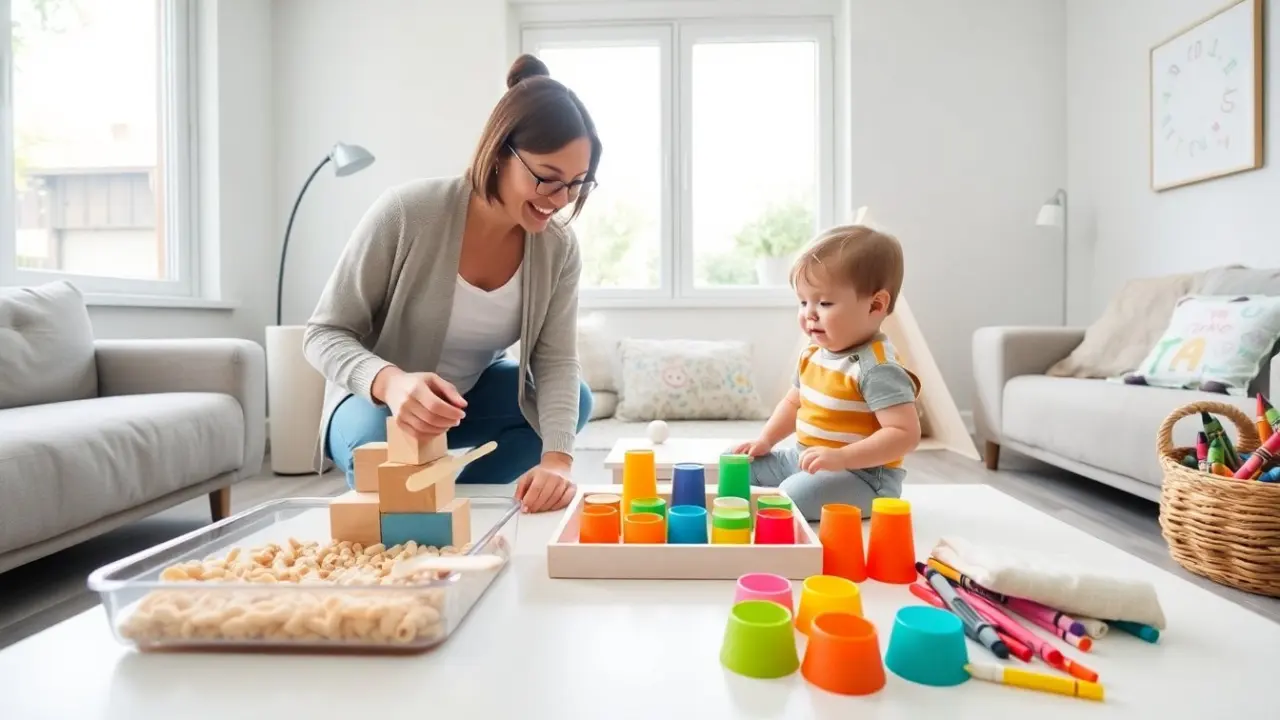
Caregivers can fill a shallow bin with dry pasta and small cups. They can add scoops and funnels for pouring practice. They can swap the pasta for rice or large beads. They can set a towel under the bin and limit play to ten minutes. For water play, they can use a shallow bowl and plastic toys. They can add a sponge and a cup for pouring. They can let the toddler move toys and watch splashes. These easy toddler activities teach grip, transfer, and cause and effect.
Vary sensory materials to keep interest: add pom-poms, textured noodles, or safe kitchen tools. Use clear boundaries (a towel, low tray, or a washable box) and set a short timer to help manage expectations. For water play indoors, do it in the sink or on a low shower tray to contain spills. Always supervise sensory and water play closely and avoid small pieces for younger toddlers. Label bins or rotate themed bins (farm animals, ocean creatures, kitchen tools) to spark imagination without extra setup.
Sensory Play You Can Set Up In Minutes
Caregivers can offer a tray of textured items like cotton, sponge, and foil. They can hide small toys under the textures for a find-and-feel game. They can set up a sound box with safe containers and rice inside. They can create a scent station with a cotton ball and safe spices. They can let the toddler tap different surfaces and name the sounds. They can limit each station to five minutes. These easy toddler activities provide strong sensory input without long setup.
Quick sensory stations can be assembled from items around the house and rotated every few days to maintain novelty. Pair sensory play with simple language prompts (“What does this feel like? Is it soft or bumpy?”) to connect sensation with words. For multi-sensory engagement, combine textures with movement—encourage dumping, scooping, or gentle shaking. Keep accessible storage for small containers so caregivers can swap stations in under a minute, making it easy to offer consistent, developmentally rich play throughout the week.