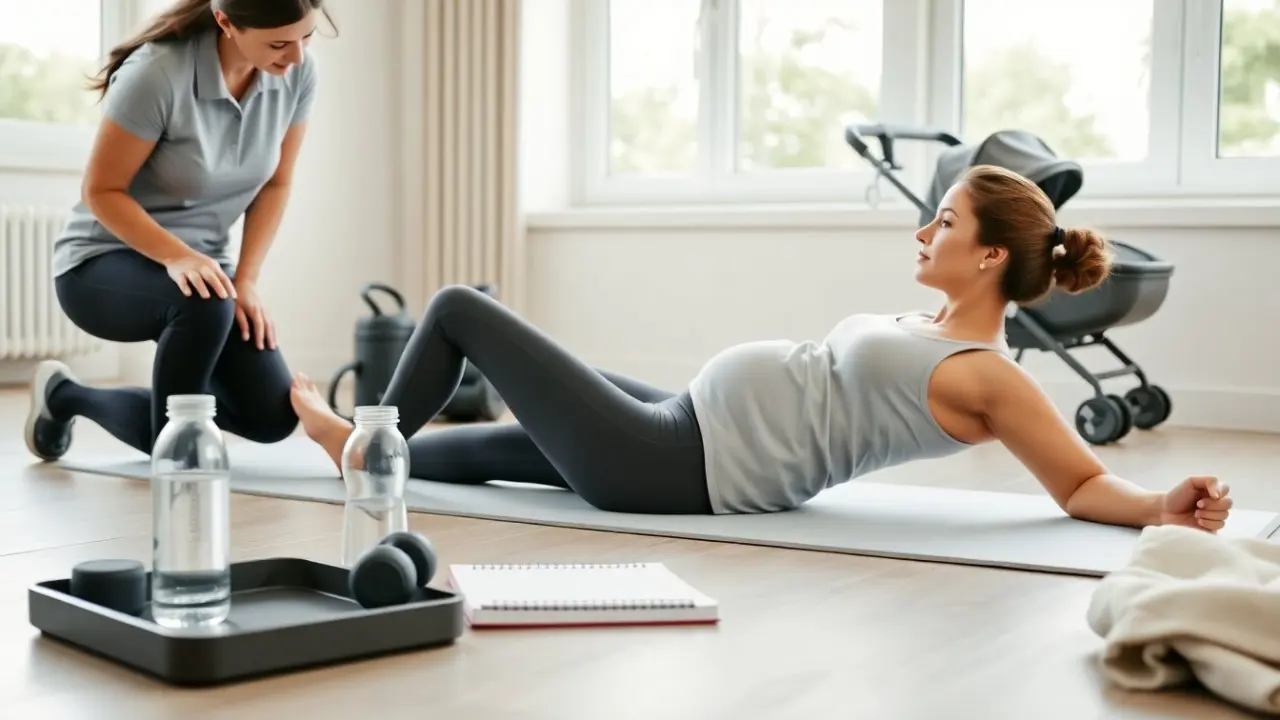
The best postpartum workout program helps a new parent return to strength safely. It begins with simple checks and basic movement. The plan uses progressive steps and clear goals. It avoids high-impact work until the body heals. The program focuses on core, pelvic floor, posture, and gradual strength. It fits busy schedules and respects recovery limits.
Key Takeaways
- The best postpartum workout program prioritizes safety by starting with medical clearance and basic movement assessments before progressing.
- Focus early workouts on gentle pelvic floor activation, breathing exercises, and light walking to support recovery and prevent injury.
- Gradually introduce strength and functional training over 8 weeks, emphasizing core, pelvic floor, posture, and controlled progression.
- Track symptoms like pain, leakage, and fatigue closely, and adjust intensity or pause workouts if adverse signs appear.
- Avoid high-impact exercises until cleared by a professional, and modify movements to fit current capacity and recovery status.
- Consistent sleep, hydration, and nutrition are essential to enhance muscle repair and maximize postpartum workout benefits.
How To Know You’re Ready: Safety Checks, Red Flags, And Baseline Assessments
Before starting the best postpartum workout program, the parent should get medical clearance. A clinician will confirm uterine involution, incision healing, and normal bleeding. The parent should report dizziness, severe pain, or heavy bleeding. These signs require a pause and a clinician review.
The parent should test basic movements to set a baseline. Have the person try a breath with gentle abdominal tension while lying on the back. Observe for a belly bulge that forms like a cone. If the bulge appears and does not reduce with gentle contraction, the person should delay intense exercise and seek a specialist.
Assess the pelvic floor with simple cues. Ask the person to stop urine midstream during a bathroom visit. If stopping causes pain or they cannot do it, do not use that as a training exercise. Instead, note the difficulty and schedule a pelvic floor check with a physiotherapist.
Check posture and shoulder mobility. Have the person stand and lift the arms overhead slowly. Look for pain or major imbalance. Limited shoulder mobility can cause neck and back strain during exercise. Modify movements that stress the shoulders.
Use a walk test as a practical baseline. Ask the person to walk briskly for 10 minutes and note breath and recovery. If breath does not return to normal within five minutes, start with lower intensity work and monitor progress.
Red flags that require immediate medical review include chest pain, sudden severe shortness of breath, fainting, or heavy bleeding with clots larger than a golf ball. If any red flag appears during the best postpartum workout program, stop and seek care.
The 8‑Week Postpartum Workout Program — Week‑By‑Week Breakdown
Weeks 1–2: Focus on gentle activation. The parent should perform pelvic floor contractions, diaphragmatic breathing, and gentle walking. Do three short sessions per day of pelvic floor lifts: 5–10 slow squeezes followed by 5 quick lifts. Add ankle pumps and light marching to reduce swelling. Keep sessions to 10–15 minutes. The parent should avoid heavy lifting and straining.
Weeks 3–4: Introduce low-load strength and core work. The plan adds hip bridges, side-lying leg lifts, and supported squats. Do two strength sessions per week and three mobility sessions. Use one- to two-kilogram weights or bodyweight. Progress only if pain is absent and leakage is controlled. Continue pelvic floor cues with each set.
Weeks 5–6: Increase load and add functional training. The program introduces standing rows, split squats, and deadlift patterns with light weight. Add a core series that includes heel slides, modified dead bugs, and side planks with knee support. Do two strength sessions and one cardio session per week. Cardio should start at low impact, such as brisk walking or cycling for 15–20 minutes.
Weeks 7–8: Focus on strength and controlled impact. The plan raises strength intensity with heavier sets and lower reps. The parent should test single-leg balance, carry patterns, and controlled step-ups. Add short intervals of higher heart rate work, like fast walking or very light jogging, only if the pelvic floor holds and there is no pain. Continue one session per week for mobility and pelvic floor maintenance.
Every week: Progress slowly and record symptoms. The parent should track leakage, pain, and fatigue after each session. If symptoms increase, reduce load or revert to the prior week. The best postpartum workout program uses clear metrics: ability to breathe with control, absence of new pain, and steady symptom decline. These metrics guide progression.
The program permits extra recovery days when sleep and stress are poor. The parent should prioritize sleep, hydration, and protein intake. These supports improve muscle repair and energy for training.
Modifications, Common Pitfalls, And When To Progress Or Pause
Modify exercises to match current capacity. If a movement causes leaking, swap it for a lower-load option. For example, replace jumping with marching in place. Replace heavy kettlebell carries with lighter holds and shorter distances. The parent should use support, like a chair or wall, to protect balance.
Common pitfall: rushing intensity. If the parent increases intensity too fast, they may see pain or urinary leakage. The person should add either more sets at the same load or slightly more weight, not both. Progress in one variable at a time.
Common pitfall: ignoring pelvic floor cues. The parent should not brace the breath and bear down during lifts. Teach the person to inhale, gently brace the core, and exhale during effort. This cue reduces downward pressure on the pelvic floor.
When to progress: the person can increase load when they complete current sets with control, report zero new pain, and report no new leakage for two weeks. Increase weight by small increments. Add one more set or five more pounds rather than doubling the load.
When to pause: stop the program if the parent has new sharp pain, heavy bleeding, or signs of infection. Pause if the person feels extreme fatigue that impairs daily function. After a pause, return to the last symptom-free week and rebuild more slowly.
Use simple tracking to stay safe. The parent should log session type, load, and any symptoms. Regular checks with a clinician or physiotherapist help when progress stalls. A specialist can offer manual therapy or exercise adjustments.
The best postpartum workout program supports steady gains. It keeps the focus on safe movement, measured progression, and daily recovery. This approach helps the parent rebuild strength, restore core control, and regain confidence.