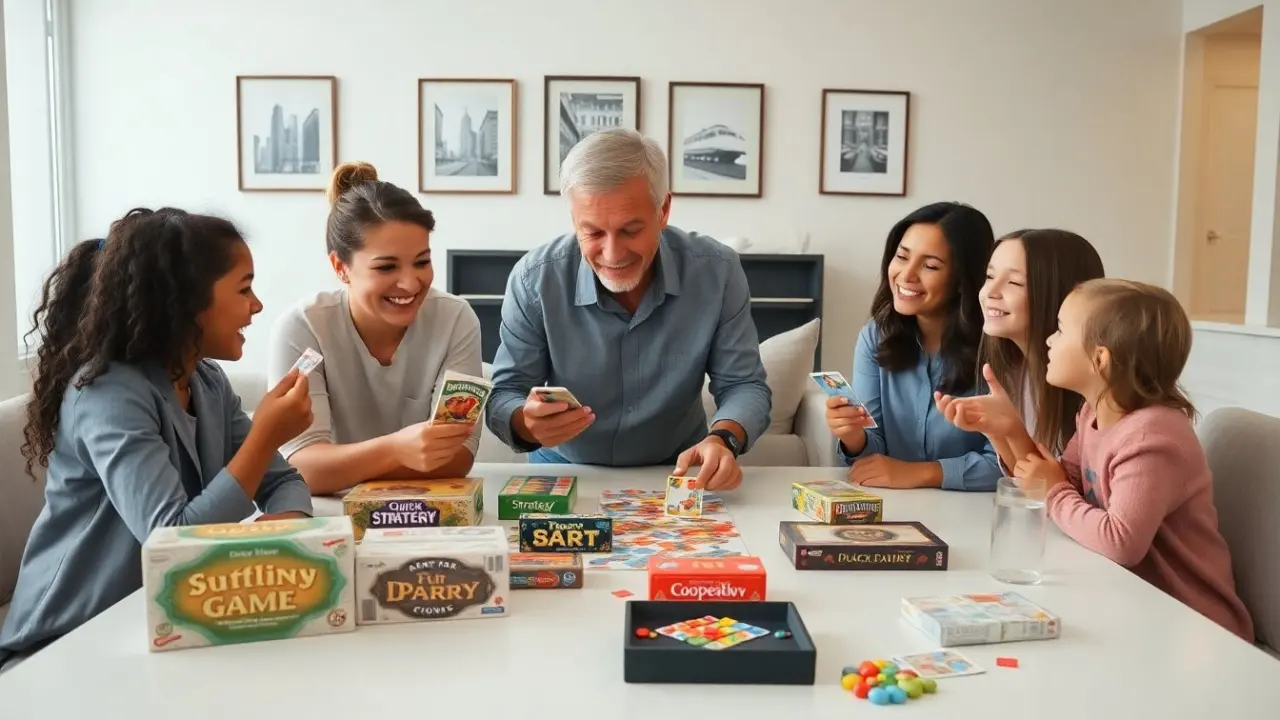
best games for family game night help families create quick, memorable evenings that fit real household rhythms. This article ranks games by age, time, and play style and offers concrete guidance to help readers pick titles that fit group size, attention span, and skill level. It favors games that start fast, end clean, and keep energy high while offering a mix so every player gets a turn to shine. You’ll find named games across categories, explanations of why they work for different groups, suggestions for sequencing a night, and practical setup and hosting tips to reduce friction and increase playtime.
Key Takeaways
- Choosing the best games for family game night involves considering players’ ages, available time, and preferred play style to ensure everyone enjoys the experience.
- Mixing game types—quick party games, strategy boards, and cooperative titles—helps maintain energy and engagement throughout the evening.
- Quick party games like Taco Cat Goat Cheese Pizza are perfect openers that spark laughter and keep sessions short for early rounds.
- Age-specific game recommendations optimize fun and skill development: tactile games for ages 4–7, light strategy for 8–12, and deeper strategy or social deduction for teens and adults.
- Setting a clear schedule, simplifying rules with demos, and rotating game selectors enhance flow and fairness during family game night.
- Preparing easy-to-eat snacks and sitting with clear sight lines fosters a comfortable, inclusive atmosphere for all participants.
How To Choose The Right Game For Your Family
Start by listing the ages and attention spans of the people who will play, how much time you want to spend, and whether players prefer luck, silliness, or tactical choices. A useful rule of thumb: pick games that can be taught in a single demo and have predictable setup time. Match the printed play time to reality—many family sessions run longer because of teaching and breaks—so plan a buffer. Include a mix: one quick party opener to warm up, one main strategy or cooperative title for the middle, and a short finisher if you have time.
When evaluating games, read two or three short reviews and watch a one-round demo video if rules seem fiddly; that often reveals hidden setup or downtime. Look for games with inclusive rules or easy variants so younger players can join without slowing the group. If multiple boxes look appealing, consider player counts (does it scale to your group?), table footprint (will it fit your dining table?), and component durability (kid-friendly pieces are a plus). Finally, set a gentle rule-change limit—allowing one house rule to adapt difficulty is fine, but too many changes can bog down play and lead to frustration.
Best Games By Type: Quick Party Games, Strategy Boards, And Cooperative Picks
Mixing game types keeps energy balanced across an evening. A fast, social opener loosens people up and reduces first-turn anxiety. A longer strategy or cooperative title in the middle can be the night’s highlight, allowing for deeper engagement. Finish with a lighter, communal game if attention is waning or with a short party game to send everyone off laughing. Below are stronger picks for each role, with quick notes on why they work and when to schedule them.
Quick Party Games For Laughter And Short Play Sessions
These titles start fast, resolve quickly, and keep the room lively. They’re ideal as openers, tiebreakers, or anytime you need a reset between longer games.
- Taco Cat Goat Cheese Pizza. Fast verbal matching and slapping mechanics make this a wild opener for ages 6 and up. Minimal rules and near-zero setup mean you can start within a minute.
- Just One. Cooperative clue-giving that rewards creativity and clear thinking; rounds are short and it scales well for larger groups, making it a great mid-evening palate cleanser for ages 8 and up.
- Wavelength. A team-based guessing game that sparks conversation without long downtime. Good for mixed-age groups when you want a 20–30 minute socially driven game.
- Spot It! (also called Dobble). Quick visual matching with handheld play—excellent for short attention spans and as a warm-up for younger players.
- UNO. A classic card game with simple rules that many families already know; it’s adaptable with house rules and works as a low-pressure filler between longer sessions.
Age-Grouped Recommendations — Best Picks For 4–7, 8–12, And Teens/Adults
Choosing age-appropriate games improves enjoyment and reduces teach/reteach cycles. Below are curated suggestions and guidance on how to modify play to include different ages at the same table.
Ages 4–7: Pick short, tactile, and clear-rule games that reward observation and simple choices. Look for cooperative elements so new readers or players feel included. Recommended titles: Outfoxed., Spot It., Hoot Owl Hoot. For mixed-age games, use hand- or team-based aids (give younger players fewer cards or let them be the “helper” on a team) so they contribute without slowing the group. Aim for 10–20 minute rounds and allow repeat plays to build confidence.
Ages 8–12: Choose games that introduce planning, pattern recognition, and light strategy while keeping turns short. These titles help develop decision-making without overwhelming younger players. Recommended titles: Ticket to Ride: First Journey, Kingdomino, Sushi Go. Use variants or simplified scoring to keep sessions within 20–45 minutes. Encourage kids to teach once they learn a game—teaching reinforces rules and gives them ownership of the night.
Teens/Adults: Offer deeper choices, longer arcs, or social deduction that rewards reading other players. These games provide replay value and can anchor a family tournament or multi-night rotation. Recommended titles: Pandemic (cooperative), Azul (abstract strategy), Codenames (social deduction/team). For mixed groups, consider team play pairing adults with younger players, or use handicap rules (extra turns or starter resources) to balance skill differences. Expect 30–60 minute sessions for main events.
Across all age groups, be ready to shorten or lengthen games with accepted house variants and keep an accessible “kids’ mode” for complex titles so everyone stays engaged.
Practical Tips For Hosting A Great Family Game Night
Good hosting reduces friction and keeps the spotlight on play rather than logistics. Set a clear start time and approximate end time so families can plan around meals and bedtime. Decide on a main game and two backups based on expected time and player count; this prevents awkward pauses if a game is too long or too short. Arrange seating so everyone can see cards and boards, and clear clutter from the table to create a single, well-lit play area.
Explain rules succinctly: give one quick demonstration round rather than reading the full rulebook at the table. Use a visible timer or phone timer app for slow turns to keep pace without policing players. Rotate who chooses the next game to share ownership and keep selections varied. Prepare low-mess, finger-friendly snacks and drinks in reachable bowls to avoid spills and long cleanup breaks.
Other practical touches: have a small notepad for scoring, a box or tray to hold small pieces between plays, and a simple set of house rules (maximum turn time, handshake on disputes, and how to handle early leavers). Celebrate good plays and funny mistakes equally to keep the tone inclusive. If someone feels left out, pause and invite them into the next round with an easy role—dealer, scorekeeper, or “rule reminder.” Over time, building a short ritual (opening game, main event, finisher) helps the family form a predictable, enjoyable routine for game night.